Invitation: Bloomsday 2017

Along with Neville Potter, a PhD graduate of SLLL, Russell Smith has been involved in organizing an event for Bloomsday, the annual celebration in honour of James Joyce’s novel Ulysses (1922), set on Thursday 16 June 1904. The event will take place not on Bloomsday itself (purists be warned) but on the night before, which happens to be a Thursday, 15 June 2017, at the Irish Club in Canberra, and will feature readings from the novel, songs and Irish music, and a two-course dinner. Please find the poster here, distribute this widely and make sure to book early!

Lunchtime seminar: Monique Rooney on the aesthetics of Rousseau’s amour de soi

Love’s Intermediary: the Aesthetics of Rousseau’s Amour de Soi (Self-Love)

Thursday 25 May, 1pm Milgate Room, AD Hope Bldg, SLLL

‘Love, like perfectibility, is structured like a figure of speech’ writes Paul de Man in a statement that resembles that of a famous psychoanalyst on the unconscious and language. If de Man’s figural ‘Love’ here echoes Lacan’s linguistic unconscious then this mimetic resonance is implied, rather than categorically referenced, in the chapter ‘Self (Pygmalion)’ (Allegories of Reading, 1979) in which de Man engages not with Lacan but with Rousseau’s dramatisation of self-love. For de Man, Rousseau’s Pygmalion (1762) amounts to more than an exploration of vanity. Instead the statue’s metamorphosis—which is structured ‘like a figure of speech’—dramatises the idea that Pygmalion’s artwork is radically other.

The first part of this paper closely engages with the highly rhetorical distinction Rousseau makes between amour propre (love based on vanity, pride or desire for esteem) and amour de soi (self-love) in explicitly philosophical (written) works in which amour de soi is speculatively associated with a pre-linguistic and pre-social moment in time. Turning to de Man’s analysis of Pygmalion, the paper then emphasises the significance of suspension as a figural or dramatic halting of time through which Rousseau’s more elusive version of self-love (amour de soi) is impossibly re-animated and from within the ‘monstrous concatenation’ or ‘mixed genre’ that is Rousseau’s lyric scene (de Man, 1979). How then, the paper asks, might Rousseau’s scene of suspension and reanimation, and its enduring legacy of melodrama, contribute to the transhistorical theorisation of intermediality in the digital age?

Monique Rooney teaches in the English Program, ANU. Her current project further pursues, and applies to an Australian aesthetic context, the ideas about intermediality explored in Living Screens: Melodrama and Plasticity in Contemporary Film and Television (2015).

Lunchtime seminar: Hadley-Williams on 17th c manuscript and its verse

Mixed pleasure: A seventeenth-century manuscript and its verse

The collection and use of vivid contemporary evidence of all kinds, so much a part of the method and works of the reformer, John Knox, were practices continued by later historians of religious history. One such gathering of documents, copied and original, is Robert Wodrow’s of the early eighteenth century, now held by the National Library of Scotland. It includes Wod.Fol.VIII, a version of David Calderwood’s History of the Kirk of Scotland, dated 1636. The manuscript also has its own interest, especially for literary scholars. Fourteen short pieces of verse, in either Latin or Scots, are inserted into the prose text. In several cases the poems are well known from their appearances in John Foxe’s Actes, the histories of Knox and Calderwood, and similar works. In Wod.Fol.VIII, however, these versions of known poems have small or more substantive differences, which help to reveal circulation patterns and the evolution in thinking about the issues they address. A few other poems in Wod.Fol.VIII are not known to occur elsewhere. These are here reported, and briefly studied. The paper will discuss the 1636 manuscript, its copyist, and the verse inclusions.

Janet Hadley Williams is Honorary Lecturer, English and Drama, in SLLL, and President of the Sir David Lyndsay Society. For the Association for Scottish Literary Studies she edited Sir David Lyndsay: Selected Poems (2000). She has edited several essay collections, including (with Priscilla Bawcutt), A Companion to Medieval Scottish Poetry (2006), and (with J. Derrick McClure), Fresche fontanis: Studies in the Culture of Medieval and Early Modern Scotland (2013). Her edition for the Scottish Text Society, ‘Duncane Laideus Testament’ and Other Comic Poems in Older Scots, appeared in 2016.

Lunchtime seminar: Rosanne Kennedy on ‘Shards of Testimony’.

Shards of Testimony: Digital Witnessing to Refugee Lives in Detention

Thursday 11 May, 1pm Milgate Room, AD Hope Bldg, SLLL

This paper explores two contemporary case studies of digital witnessing based on the experiences of refugees and asylum seekers in the Australian offshore border protection regime. First, The Messenger, a podcast from within the detention centre on Manus Island in PNG, broadcasts the voice of Aziz, a young Sudanese refugee who is now in his third year of detention. Aziz and Michael, a journalist in Melbourne, use WhatsApp to communicate. The intimate form of voice recordings enables Aziz not only to report on the daily routines and disruptions that structure life at the camp, but to convey a strong sense of himself and of life in the camp. Second, we consider the Nauru Files, incident reports written by staff at the detention centre on Nauru, leaked to The Guardian and made accessible online in an interactive digital database.

We will map these two cases as a ‘dense digital environment’ generated by an assemblage of technologies that disseminate refugee testimonial now from within a border protection regime that works to render these offshore sites invisible and silent. As Kay Schaffer and Sidonie Smith suggest, digital environments raise provocative questions about how to approach emergent acts and instances of witness. Here we will argue that distinctive assemblages of user, story, interface and device are emerging from these southern spaces, and that, as the streets and squares of Cairo are imprinted in e-witnessing from the Arab Spring, so too the mobilisation of testimony from these camps is a distinctive testimonial culture.

Rosanne Kennedy is Associate Professor of Literature and Gender, Sexuality and Culture at the Australian National University. Gillian Whitlock is Professor of Literature at University of Queensland. They are working on a project on refugee live narrative in a digital era.

Lunchtime seminar: Ash Collins on the forgotten Spinozist

The Forgotten Spinozist: Romain Rolland, Gilles Deleuze, and the Figure of Christ

To this day, the thinking of Spinoza still serves as a powerful tool for those seeking to negotiate the nexus between theological transcendence and the immanence of worldly existence. This paper explores the thought of one of the most important—and yet least remembered—Spinozists within 20th century French intellectual history: the Nobel Prize-winning French novelist, Romain Rolland (1866–1944). Past scholarship has repeatedly identified a divergence between the Catholic orthodoxy against which a youthful Rolland rebelled and the Spinozist non-conformism that shaped his thinking throughout life. By re-reading Rolland’s intellectual engagement with religion through the thinking of Gilles Deleuze, this study counters such critical interpretations and argues that the tension between Catholic orthodoxy and Spinozism cannot purely be seen in terms of a polemical conflict, but rather as the opportunity for a fruitful dialogue that has much to offer our own treatment of the religious question in the 21st century.

Ash Collins is Lecturer in French Studies at the Australian National University. His primary research interests include 20th and 21st century French intellectual history, 20th century French literature, continental philosophy, philosophy of religion, and philosophy of education. He has published his research in journals such as Australian Journal of French Studies, International Journal for Philosophy of Religion, and Educational Philosophy and Theory.

Lunchtime seminar: Anuparna Mukherjee on the Postcolonial Spectropolis


“After the Empire”: Haunting and Nostalgia in the Postcolonial Spectropolis

Thursday 27 April, 1pm Milgate Room, AD Hope Bldg, SLLL

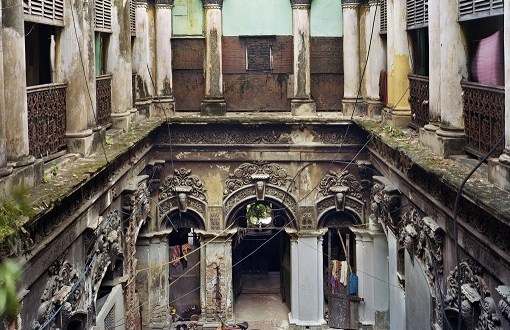
My paper delves into the question whether the grotesque and the fantastic can work concurrently with mainstream historiography to interpret a postcolonial city through the affective windows of nostalgia and trauma. It is partially predicated on the stories of legendary haunted houses from British Calcutta, and partly on the ghosts of historical personages who have a reputation for haunting the city, to locate how Calcutta negotiates with the traces of its past. Some of these incidents of haunting are results of deep historical trauma for those colonizers whose nation was witnessing an accelerated economic decline after the loss of its prosperous colonies and the devastation of the two World Wars. Contrariwise, they also explode the secret that India’s freedom was after all not entirely free of sorrow. These unspeakable secrets, suppressed by a dense conspiracy of silence, became the symptom of a devastating trauma, and return as ghosts in postcolonial narratives of the nation. These accounts show how what is touted as the colonizer’s past can be appropriated, modified and owned by the recalcitrant colonized population to claim their stake in that history.

Anuparna Mukherjee is a PhD candidate in SLLL. She represented ANU at the Cambridge AHRC conference on ‘Time and Temporality’ and recently guest-edited with Arunima Bhattacharya a special issue of Sanglap on ‘City, Space and Literature’.

Lunchtime seminar: Jack Yeager on the Fiction of Linda Lê

Writers and Their Work in the Fiction of Linda Lê

Thursday 20 April, 1pm Milgate Room, AD Hope Bldg, SLLL

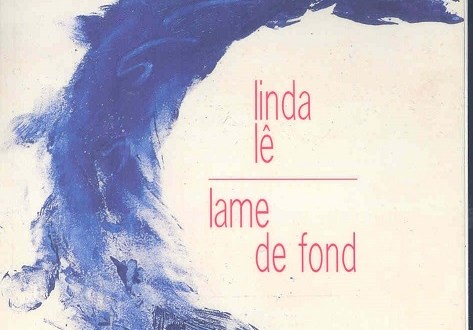
Historically, novelists from former French colonies who write in French have come under special scrutiny. Some have been accused outright of plagiarism; in at least one case, such an accusation ended a writer’s career. Linda Lê, the most prolific contemporary writer in French with ties to Viet Nam, implicitly probes the issues of originality, intertextuality and plagiarism in her fiction by casting writers as main characters. At the same time she examines the multiple identities of immigrant writers in French and their challenges to what constitutes French literature.

Jack A. Yeager is Professor of French Studies and Women’s & Gender Studies at Louisiana State University in Baton Rouge. His work focuses on narratives in French from Viet Nam and from diasporic Vietnamese communities. At LSU he teaches classes on Southeast Asia, Québec and Francophone studies generally as well as courses in French language.

Lunchtime seminar: Leslie Barnes (ANU) on the lost history of Cambodian film

Un cinéma sans image: The lost history of Cambodian film

Thursday 13 April, 1pm Milgate Room, AD Hope Bldg, SLLL

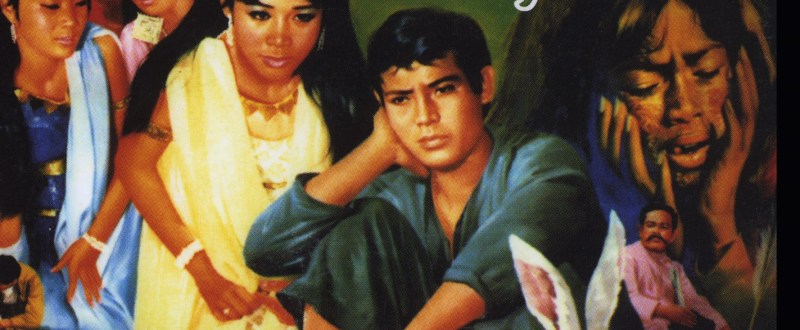
Davy Chou’s Le Sommeil d’or (2011) is the first attempt to recount the forgotten history of the Cambodian film industry, a rich and storied archive that all but disappeared with the Khmer Rouge victory in 1975. To make the film, Chou returned to a homeland that is not fully his to capture the memories of a handful of people with whom he shares neither language nor experience. The result, I will suggest, is a work of palimpsestic memory that layers space and time in an attempt to conjure the traces of this lost cultural heritage. Notably however, Chou uses almost none of the surviving footage from the period in his film. This decision, perhaps unusual given the filmmaker’s objective to make the past visible, encourages us to interrogate the ubiquity of the image in relation to the work of memory. Further, having never ‘left’ the homeland on which he now trains his camera, Chou crafts a film that simultaneously privileges and problematizes the idea of return, offering a post-migratory imagining of the second generation’s relationship to the notions of place and belonging, culture and heritage.

Leslie Barnes is a Senior Lecturer in French Studies and the author of Vietnam and the Colonial Condition of French Literature (Nebraska, 2014). She is currently working on a project on narrative representations of sex work in Southeast Asia and has published on this subject in Screening the Past, French Cultural Studies, and Australian Journal for French Studies.

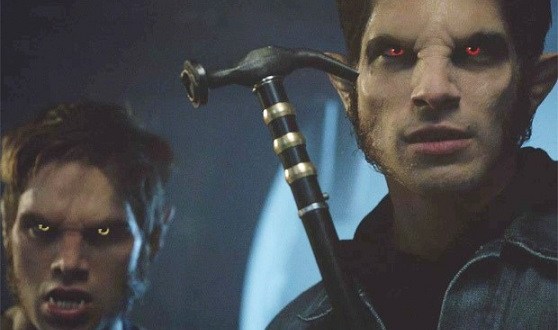
Tania Evans on the monstrous in Teen Wolf

The Phallus or the Cane? Re-reading the monstrous in Teen Wolf through disability and queer theory

Thursday 30 March, 1pm Milgate Room, AD Hope Bldg, SLLL

The growing body of academic scholarship on werewolves has often focused upon gender but rarely has it considered how sexuality and disability are reflected in lycanthropic narratives. Yet the werewolf can be read through these lenses, since it often disrupts normative ideas about the gendered body. These challenges to compulsory able-bodiedness and heterosexuality are the focus of this paper, which analyses MTV’s young adult television series Teen Wolf using disability studies and queer theory. I argue that while the intersection of disability and queerness is integral to the series’ construction of monstrosity, it is also is where the series is most progressive—and subversive. The queer re-reading in this paper is enabled through Marjorie Garber’s work on transvestites, specifically her concept of the detachable phallus. By analysing the monstrous disabled characters in Teen Wolf in terms of how their prostheses signify both their disabilities and their sexual agency, I demonstrate how the series contests heteronormative logic when queerness and disability entwine. Given the series’ popularity among young audiences who are negotiating their own transformation into adulthood, Teen Wolf may invite viewers to recognise that neither sexuality nor ability can be contained within a binary and that variance is not only possible but valuable.

Tania Evans is a final year PhD candidate in SLLL. Her doctoral project investigates the textual construction of masculinities in George R. R. Martin’s A Song of Ice and Fire and its television adaptation Game of Thrones. Her work has been published in Gothic Studies and Masculinities, and will appear in the edited collection Exploring Teen Wolf (McFarland Press).

Lunchtime seminar: Christie Carson (Royal Holloway) on Shakespeare and the Digital World

Shakespeare and the Digital World: When scholarship meets global capitalism

Thursday 30 March, 1pm Milgate Room, AD Hope Bldg, SLLL
In order to understand the place of the academic in the commercially driven world of digital recording, archiving and dissemination of Shakespeare’s plays in text and performance I put together a volume entitled Shakespeare and the Digital World: Redefining Scholarship and Practice. In this book, which tackles the thorny issues of authority and power, Peter Kirwan, my co-editor, and I stress the importance of continually redefining what is meant by ‘Shakespeare’ and ‘the digital’. In this paper I scrutinise my own work to illustrate the importance of speculating about the future in order to help to form, as well as inform, it.

Christie Carson is Reader in Shakespeare and Performance in the Department of English at Royal Holloway University of London. She is the co-editor of The Cambridge King Lear CD-ROM: Text and Performance Archive (Cambridge, 2000) and the Principal Investigator of the AHRB-funded research project Designing Shakespeare: An Audio-Visual Archive, 1960-2000, which documents the performance history of Shakespeare in Stratford and London. She has published widely on the subject of contemporary performance and the influence of digital technology on audience interaction and research practices, including articles for Shakespeare Survey and Performance Research. She has co-edited four volumes of essays for Cambridge University Press.