
Books Giveaway


Join us for this week’s CuSPP Seminar (taking place via zoom)
Thursday 25 March, 4.30 – 6pm (see CuSPP email or contact monique.rooney@anu.edu.au for zoom link).
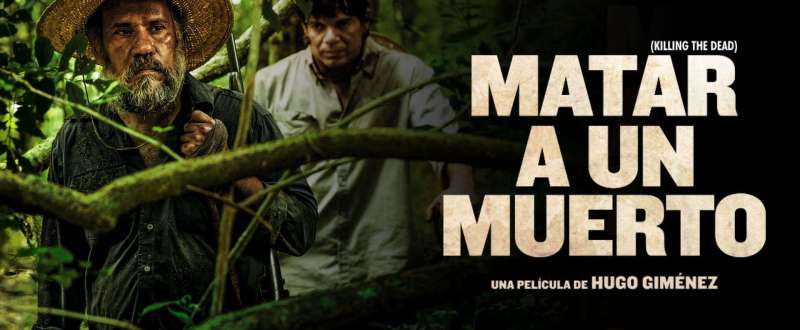
Spectres and Secrets in the Paraguayan Woods: Hugo Giménez’s Matar a un muerto (2019)
This paper deals with the representation of genocide and forced disappearance in Hugo Giménez’s first feature film Matar a un muerto (Killing the dead, [2019]), set in 1978, during the Paraguayan and the Argentine dictatorships. Building on arguments made about the role of dictatorial violence in language in both Jacques Derrida’s Spectres of Marx and A Taste for the Secret and American translator and scholar Marguerite Feitlowitz’s essay A Lexicon of Terror, I offer a reading of the film, which I see as an unconventional example of a genre that is currently reaching its peak in Latin America: the political thriller. I especially focus on how the film spatializes spectres and secrets in the Paraguayan woods to portray instances of state-sponsored forced disappearance in Paraguay and Argentina. Following Judith Butler’s concepts of ‘precariousness’ and ‘precarity,’ I provide a theorization of what I call ‘precarious secrets,’ as a distinctive feature of Latin American political thrillers. Finally, I conclude by asking about the political implications of the cultural representation of secrecy and specters for Latin America today.
Dr. Fabricio Tocco holds a PhD in Hispanic Studies from the University of British Columbia, Canada. His research deals with the intersections of literature and history, especially the way popular genres inform and are informed by literary and political theory in Latin American cultural studies. His first monograph, a revised version of his dissertation, A Poetics of Failure: Individualism and the State in Latin American Detective Fiction, will be published next year by Lexington Books. He has recently joined the ANU in January as a Lecturer in Spanish and as the Portuguese Convenor.
Join us for the first CuSPP Seminar of 2021
Thursday 25 February, 4.30 pm, AD Hope Conference Room, First Floor, AD Hope Bldg.
Dr Neil Ramsey (UNSW, Canberra), From Mode of Production to Hegemonic Regime: War, Wealth, and the Navy in the Early Nineteenth-Century Novel
In this paper I propose a critique of the commercial view of literary history by drawing attention to elements of militarism in the formation of the early nineteenth century novel. The prevalence of the navy in literature of this period has been noted by numerous critics, most notably with reference to Jane Austen’s Persuasion (1818). This paper seeks to better theorize this naval dimension by turning to the world-systems thought of Giovanni Arrighi and reformulations of his work via the neo-marxist approach of Jacques Bidet. Questions of finance have loomed large in recent literary analysis, much of which has drawn on Arrighi’s understanding of the historical power and vicissitudes of global finance. I draw attention to a second dimension of Arrighi’s thought, which has been almost wholly ignored by literary critics – that he locates financial power alongside territorial power as an essential conjunction in the historical formation and evolution of capitalism. To elucidate this conjunction I follow Jacques Bidet’s neo-marxist adaptations of Arrighi’s thought to conceptualise how financial and territorial power act as two distinct yet intersecting logics of power, consisting of modes of production and modes of government, that have historically shaped a series of shifting hegemonic regimes within capitalism. Sketching a reading of these ideas in relation to Persuasion, I argue that the literary fascination with the navy in this period reveals how the novel attempts to express and manage the contradictions that historically formed between these competing logics of power of financial markets and biopolitical organisation. I argue that to read the novel in relation to Bidet’s concept of hegemonic regimes helps us to extend and redefine the commercial orientation of Marxist analysis reliant simply on reading in relation to modes of production.
Dr Neil Ramsey is a Senior Lecturer in English Literature at UNSW Canberra. He works on the literary and culture responses to warfare during the eighteenth century and Romantic eras, focusing on the representations of personal experience and the development of a modern culture of war. His first book, The Military Memoir and Romantic Literary Culture, 1780-1835, was published by Ashgate in 2011. His most recent, a collection co-edited with Gillian Russell, Tracing War in British Enlightenment and Romantic Culture, was published by Palgrave in 2015. He is currently completing a monograph on military writing of the Romantic era, the research for which was funded by an Australian Research Council Postdoctoral Fellowship. He is convenor of the Conflict and Society Research Group in the School of Humanities and Social Sciences.
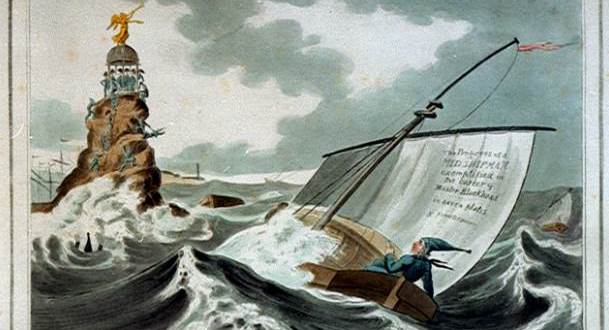
Image: Georg Cruikshank, Midshipman Blockhead, The Progress of a Midshipman exemplified in the career of Master Blockhead in seven plates & frontispiece, 1835
The first seminar of the utopian network will take place via zoom next Monday, July 27, 2-3.15 pm (see detail below)
https://anu.zoom.us/j/99513426044
Utopia and Dystopia in Australian Climate Fiction
Andrew Milner (Monash University)
Climate is an important part of fictional scene setting, whether it be geographical or seasonal. And this is perhaps especially true of Australian literature, where the majority of writers are still descendants of Anglo-Celtic settlers, living in more or less uneasy relationship with a distinctly non-Anglo-Celtic natural environment. But “cli-fi” in the sense of the term coined by Dan Bloom in 2007 refers, not to climate per se, nor even to climate change per se, but more specifically to fictions concerned with the effects of anthropogenic climate change, that is, to the literature of global warming. This is a much more recent preoccupation, which dates only from the late 1970s. Most of these fictions are dystopias, but a few also contain distinctly utopian elements. The short history of Australian “cli-fi” will be traced from the first publication of George Turner’s The Sea and Summer in 1987 through to the present.
Solarpunk: Utopian Tech with an Aesthetic and Social Conscience
Deborah Cleland and Hedda Ransan-Cooper (ANU)
Solarpunk is a movement, a philosophical orientation and an aesthetic centred around radical optimism. It is about countering dystopian ‘it’s too late’ narratives with a wild unleashing of imagination, and creating spaces in the now for living as if a beautiful, just and abundant future is possible for the current inhabitants of Earth. Among the manifestos, science fiction anthologies and tumblr collections, solarpunks have a drive to understand the cultural and social changes that could, should and would accompany both a conversion to renewable energy as well as an equitable and sustainable redistribution of resources among human and more-than-human populations. Yet solarpunks also have their detractors; those that argue online solarpunk movements are elite and blind to the needs of the poor or people with disabilities. Much like ‘early adopters’ and other groups who pursue an ‘off-grid’ life, they can be accused of seeking expensive technological solutions that impose new costs on far-distant places. We are interested in breaking down this either/or approach and exploring a typology of ways that householders in Australia are embodying solarpunk ethics – what drives them and how do their practices intersect with other concerns around social justice? How can our research on emerging technologies and environmental justice and democracy learn from, and contribute to, the solarpunk community more broadly?
Tracing Visible Falls in Ottessa Moshfegh’s My Year of Rest and Relaxation (2018)
Join us for this week’s CuSPP Seminar
Thursday 12 March, 1pm, Milgate Room, AD Hope Bldg, SLLL
In Ottessa Moshfegh’s My Year of Rest and Relaxation (2018), the unnamed narrator decides to hibernate in her New York City apartment for a year, inducing and extending sleep through excessive use of prescription medication. After finding traces of either semi- or unconscious activity while sleeping, the narrator arranges for conceptual artist Ping Xi to video-record her in her bedroom while she is heavily sedated. The novel’s ‘year’ begins in 2000 and ends on 9/11. Its fascination with discerning a ‘being-in-sleep’ is offset by its invocation of pre-digital media and devices, including both the narrator’s repeat viewings on her VCR of films starring Harrison Ford and Whoopi Goldberg and her interactions with analogue equipment (answering machines, video-cameras). This paper connects the narrator’s voluptuous love of 80s and 90s media with the reader’s reception of the novel in which she sleeps. I elucidate the role and significance of a range of media and devices in Moshfegh’s novel while attending to the limits of sleeper narratability. These limits are made most palpable, firstly, when the narrator experiences loss of her ‘sleep-imaginary’ in the process of viewing Ping Xi’s art exhibition featuring video images of her and, secondly, when she repeatedly watches VCR-recorded images of her friend Reva’s ‘fall’ from the World Trade Centre on 9/11. Both the fall into sleep and fall-toward-death are barely visible records of tenuous life, existing at a threshold where the authentic self momentarily emerges along with its disappearance.
Monique Rooney teaches literature, film and television in the English Program at The Australian National University. Her current research investigates ‘interbrow’—her coinage for middlebrow media produced and received during our time of digital interconnectedness.
Atomic totem: the poetics of nuclear testing in Australia
Join us for this week’s CuSPP Seminar
Thursday 5 March, 1pm, Milgate Room, AD Hope Bldg, SLLL
British nuclear testing in Australia has been poorly publicly memorialised. This is in spite of the significant risks the program posed to public safety and the remarkably “dangerous” and “deceitful” behaviour of the Menzies government and its agents throughout the episode – behaviour which was condemned by a subsequent Royal Commission as evidence of a grave “cynicism” (Conclusions and Recommendations, 1985). In this seminar, I present an overview of my PhD research into the poetics of texts connected to the nuclear testing program. I read a diverse range of texts – including works of Aboriginal life writing, the memoirs of a surveyor raconteur, and naming practices for places and military operations – through the lens of ‘unsettlement’, a critical device that has been developed in recent work on Australian poetics which enables readings of marginal texts in ways that destabilise the colonial project. Focusing on the appropriation of Aboriginal imagery in the conceptualisation of the nuclear testing program, I build an argument for the existence of a cultural symptom that I call the ‘Australian desultory’: the melancholic result of the conjunction of an unconfronted violent colonial history and the existential anxieties of the nuclear future. I also outline how this research informs my creative practice and give a short reading from the creative component of my thesis, Totem: an epistolary novel.
Annelise Roberts is a PhD candidate in the School of Literature, Languages and Linguistics at the Australian National University. Her critical work, poetry and fiction has been published or is forthcoming in journals such as Rabbit, Mascara Literary Review, Cordite, and The Suburban Review.
Culture Play: Language Learning and Self-Cultivation (Bildung)
Join us for this week’s CuSPP Seminar
Thursday 27 February, 1pm, Milgate Room, AD Hope Bldg, SLLL
In this paper, we explore the implications that the notions of Bildung and play hold for language learning. The opposition between learning as a form of vocational training for the workplace (Ausbildung) and learning as a process of self-cultivation (Bildung) seems to be ever more deeply entrenched in the twenty-first-century university. In language learning in particular, this distinction between two competing aims influences the way in which educators approach curriculum design and inevitably shapes the attitudes learners bring to the classroom. We contest this opposition by applying Friedrich Schiller’s understanding of aesthetic education to language learning. We argue that when learning activities are envisaged as a form of non-threatening and free-flowing play, skills-based language training becomes an experience of self-cultivation in which the language learner creatively renegotiates their own identity through an encounter with both their own values and those of the target culture.
Ash Collins is a Lecturer in the French Department at the ANU. Ash’s main research project currently consists of a comparative study of Jean-Luc Nancy, Jacques Derrida and Martin Heidegger revolving around the theme of deconstruction and religion. Ash has published several articles in recent years on the work of Nancy.
Manuel Clemens obtained his PhD from Yale University and until recently was Lecturer in German at the ANU.
Quantitative evidence of gender inequality in contemporary Scottish publishing
Join us for this week’s CuSPP Seminar
Thursday 14 November, 1pm, Milgate Room, AD Hope Bldg, SLLL
The UK publishing industry has an equality problem. Much recent research has evidenced systemic gender, ethnicity and class bias (‘In Full Colour: Cultural Diversity in Publishing Today’ 2004; Squires 2017; Ledbury Emerging Poetry Critics, n.d.; Ramdarshan Bold 2018; Brook, O’Brien, and Taylor 2018; Wood 2019). However, specific evidence is missing from the Scottish literary sector: while VIDA (2018) and the recent Ledbury Emerging Poetry Critics report have shown biases in UK reviewing, their work’s scope does not include Scottish national newspapers; while Griffith (2015) has shown gender bias in UK and US literary awards, the dataset does not include Scottish awards; and although gender pay gap reporting in the UK showed average differences in pay between men and women “from 11.3% to 29.69%” (Flood 2018), Scottish publishers were exempt from reporting as they comprise mostly small and medium enterprises (Ramdarshan Bold 2012). This paper examines gender equality publishing output by Scottish publishers Jan-Dec 2017, reviewing in Scottish national newspapers Jan-Dec 2017, and three selected literary festivals and their programming, Jan-Dec 2017. Building on the work of Stevie Marsden (2016; 2019) on gender equality in the Saltire Society Literary Awards, this paper also examines two suites of literary awards, the James Tait Black Prizes 1919-2018, and the Saltire Society Literary Awards 1965-2018.
Christina Neuwirth is the recipient of the Arts and Humanities Research Council/Scottish Graduate School for Arts and Humanities Creative Economy Studentship “Women of Words”, and is currently completing her PhD in Publishing Studies at University of Stirling, University of Glasgow and Scottish Book Trust. Her fiction and non-fiction writing has been published in various anthologies, journals and magazines in the UK, and her debut novella Amphiban (Speculative Books) was published in 2018. @ChristinaNwrth
Sexual Liberation, Socialist Style: Intimate Life and Expertise in Communist Czechoslovakia
Join us for this week’s CuSPP Seminar
Thursday 7 November, 1pm, Milgate Room, AD Hope Bldg, SLLL
While the usual account places sexual liberation to 1960s West, I will argue for an earlier and systemic sexual liberation that took place in the 1950s in one of the countries of the Cold War East. I will show how important aspects of sexuality were freed already during the first postwar decade in Czechoslovakia: abortion was legalized, homosexuality decriminalized, the female orgasm came into experts’ focus – and all that was underscored by an emphasis on gender equality. However, by the late stages, known as Normalization, gender discourses reversed, and women were to aspire to be caring mothers and docile wives. Good sex was to cement a lasting marriage and family.
In contrast to the usual Western accounts highlighting the importance of social movements to sexual and gender freedom, here we discover, based on the analysis of rich archival sources covering forty years of state socialism in Czechoslovakia, how experts, including sexologists, demographers, and psychologists, advised the state on population development, marriage, and the family to shape the most intimate aspects of people’s lives.
Kateřina Lišková is an Associate Professor in gender studies and sociology at Masaryk University. Her research focuses on gender, sexuality, and the social organization of intimacy, particularly in Central and Eastern Europe. Her research on gender, sexuality, and expertise under state socialism was published by Cambridge University Press and won the 2019 Barbara Heldt Prize for Best Book and received an honorable mention for the 2019 Adele E. Clarke Book Award.
‘Permitted to be a person’: Re-reading Ellen Terry’s 1914 Tour to the ‘Antipodes’
Join us for this week’s CuSPP Seminar
Thursday 24 October, 1pm, Milgate Room, AD Hope Bldg, SLLL
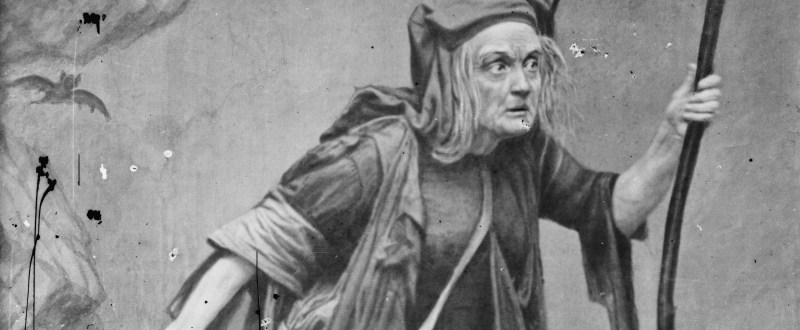
In 1914, at the age of 67, the most celebrated star of London stage embarked on a tour to Australia and New Zealand. Ellen Terry’s doctor and close family were against the venture, and biographers and theatre historians have dismissed it as ill-judged or indicative of her mental decline. In my paper I challenge this reading. I excavate media interviews and performance reviews to examine Terry’s responsive and intelligent interactions with her Australian and New Zealand audiences. These reveal her eager and critical interest in the experience of female suffrage – won in these nations long before it was granted in Britain. Terry’s correspondence from this period also reveals a lively sense of adventure and a vivid responsiveness to the land and flora which has been utterly elided by accounts that focus on her anxiety and illness. Along with Sarah Bernhardt’s, Terry’s is one of the most documented stage lives of all time. The cursory treatment given to her 1914 tour all of her biographers reveals a pervasive paradigm of theatre history: that the life narrative of the actress is read through narratives of her nation of origin. This sits at odds with dynamic and transitory life experience and influence of many touring actresses in the nineteenth and early twentieth centuries. My study of Terry is the first of six chapters in a book that investigates the moving lives of some of these moving women.
Kate Flaherty is a SeniorLecturer in English and Drama in the School of Literature, Languages and Linguistics, ANU. Kate’s research focuses on how Shakespeare’s works play on the stage of public culture. Her monograph Ours as We Play it: Australia Plays Shakespeare (UWAP, 2011) examined three plays in performance in contemporary Australia. More recent work investigates Shakespeare on the colonial stage and its public interplay with education, gender politics, imperialism, and sectarian friction.