Julianne Lamond & Melinda Harvey

Join us for this week’s CuSPP seminar:

Book Reviewing in the Australian Literary FIeld

Thursday 9 August, 1pm, Milgate Room, AD Hope Bldg, SLLL

Most of the writing about books that is published in Australia takes place outside the academy: more than 3,000 book reviews are published each year in Australian newspapers and magazines. These reviews constitute a sector of the online literary sphere that retains strong links to legacy print media, as well as to other consecrating mechanisms in the field such as literary prizes and university syllabuses. Book reviews are an important and understudied sector of the literary field. They are also, as we know from the Stella and Vida counts of the past decade, strongly gendered. This paper discusses the key findings thus far of a collaborative research project on gender in Australian book reviewing—a project that aims to understand the relationship between gender, academic criticism and more public forms of writing about literature over the past 30 years in Australia.

Julieanne Lamond lectures in English at ANU and is editor of the journal Australian Literary Studies.

Melinda Harvey is Lecturer in Literary Studies at Monash University, is series editor of Monash University Press’ Contemporary Australian Writers series, and is a current judge of the Miles Franklin Literary Award.

Deirdre Byrne on Black Panther

Join us for this week’s CuSPP seminar:

Give the Black Girl the Remote: Decolonising and Depatriarchalising

Technology in Black Panther

Thursday 2 August, 1pm, Milgate Room, AD Hope Bldg, SLL

In Ryan Coogler’s 2018 film, Black Panther, the small African kingdom of Wakanda is situated on a huge vein of vibranium, the strongest and most versatile (fictional) material in the universe. Vibranium is the source of the Wakandans’ technological enhancements, including a force-field around their high-tech capital city that makes it appear from the outside that the kingdom is impoverished and technologically primitive. Marvel’s and Coogler’s acts of giving vibranium to the Wakandans represents a powerful act of decolonising technology, which – in colonial logic – is the sole preserve of white male scientists. The most advanced technology is now in the hands of Wakanda, where the technological genius is not the hypermasculine T’challa, but his sister Shuri, disparaged by traditionalists in Wakanda as “a child”. Despite her irreverent and iconoclastic approach to tradition, sixteen-year-old Shuri is, according to the film’s producer Nate Moore, “the smartest person in the world, smarter than Tony Stark [Iron Man]”. The film’s portrayal of Shuri – a black girl nerd who is manifestly her brother’s equal in the arts of war and technology – points to how far popular media has come in decolonising and depatriarchalising control of resources in the twenty-first century.

Deirdre Byrne is Professor of English Studies and Head of the Institute for Gender Studies at the University of South Africa. She is editor in chief of scrutiny2: issues in english studies in southern africa and Gender Questions. She is one of the co-editors of Fluid Love, Fluid Gender (forthcoming from Brill) as well as a co-author of Foundations in English Literary Studies (Oxford University Press). in 2019).

James Underhill on Creating and Translating Worldviews

Join us for this week’s CuSPP seminar:

Creating and Translating Worldviews

Thursday 26 July, 1pm, Milgate Room, AD Hope Bldg, SLLL

Writers create worlds. This session will raise the question of what translators do when they translate authors. What worldviews are they translating when they translate the words and worlds of authors? What role does language play in shaping the meanings of those worldviews and the meanings they can have for us today when we transform them into other spaces, other times, other tongues?

Translating literary texts forces us to move beyond form and meaning, and to explore how the worlds of authors are patterned. By moving beyond the dictionary and beyond the idea that translators must render the meaning of their authors, this session should enable literary scholars and translators to explore ways in which literary texts work. At the same time, translating should highlight something of the sensibility of the literary scholar. This leads us to a key question related to the success of translations: What goes wrong when the literary sensibility is not developed in translators?

Professor James W. Underhill lectures on Literature, Poetics, and Translation at Rouen University in Northern France. His work on worldview and language focuses on both linguistic constraints at a deeper level, and the essential creative impulse by which individuals stimulate the shared language of the community. His most recent publications include Voice and Versification in Translating Poems (Ottawa University Press, 2017), and, with Mariarosaria Gianninoto, Migrating Meanings: the people, citizen, individual, & Europe (Edinburgh University Press, forthcoming in 2019).

Bloomsday 2018, June 16 Event

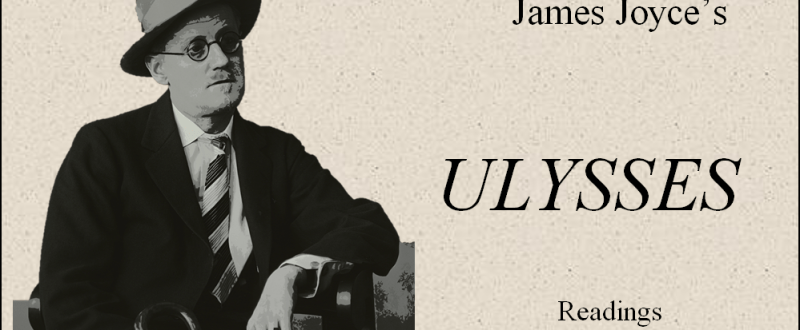
Bloomsday 2018 will take place on Saturday June 16, in celebration of James Joyce’s Ulysses. Join CuSPP member Russell Smith at the Canberra Irish Club:

6:30pm Saturday 16 June

Dress: Edwardian. Door Prizes for Best Dressed!

Canberra Irish Club, 6 Parkinson St, Weston

$40, includes two-course dinner & entertainment

Bookings (up to table of 10):
Visit: http://www.irishclub.com.au

Phone: (02) 6288 5088

Kate Flaherty on the Touring Actress as Vector of Political Change

Join us for this week’s CuSPP seminar:

Moving Women: The Touring Actress as Vector of Political Change

Thursday 31 May, 1pm, Milgate Room, AD Hope Bldg, SLLL

In 1869, one year before the first women’s suffrage bill was presented in the British parliament, John Stuart Mill published his treatise on the subjection of women. One of the lynch-pins of his argument for an end to the legal subordination of women is work. In it he recommends that ‘the present bounties and protective duties in favour of men should be recalled to permit the free play of competition’ in professional contexts. But in one profession this free play of competition had already been in effect for two centuries. In the theatre, Mill points out, women had demonstrated their more than equal aptitude to succeed: ‘The only one of the fine arts that women do follow to any extent, as a profession, and an occupation for life is the histrionic; and in that they are confessedly equal, if not superior to men.’

To position theatre as an incubation chamber for gender equity jars with popular narratives of socio-political progress. This paper makes a provocative case for touring actresses—the ‘moving women’ of my title—as providing a crucial prologue to the Women’s Movement. Charlotte Cushman and Fanny Kemble traversed the Atlantic in one of few public professions open to women in the early 19th century. They were moving women in a second sense in that they captured the imagination of an international public. I reflect upon how, both as artists and polemicists, each made a distinctive contribution to destabilising hegemonic notions about the relationship between women, work and public influence.

Dr Kate Flaherty is Senior Lecturer in English and Drama in SLLL. This paper is part of a book project mapping the influence of touring actresses on the movement for women’s suffrage

Tania Evans on A Song of Ice and Fire and Game of Thrones

Join us for next week’s CuSPP seminar:

‘Cripples and Bastards and Broken Things’: Negotiating Masculinity through Fantasy Genre Conventions in A Song of Ice and Fire and Game of Thrones

Thursday 24 May, 1pm, Milgate Room, AD Hope Bldg, SLLL

Hegemonic models of masculinity that are based upon violence, domination, and invulnerability are recognised by scholars as damaging for the individuals who enact them as well as the societies in which they are situated. In both the ‘real’ world and the cultural texts that reflect and shape it, this narrow definition of masculinity is variously negotiated, reinforced, and/or critiqued. Challenges to normative masculinity have often been found within literary representations, which engage with this model in critical ways. Fantasy fiction has seldom featured in these analyses, despite the genre’s ongoing engagement with masculine characters, themes, and images. The genre’s long history of subversive content and ability to (re)imagine the world without the constraints of realism also suggest its capacity to expand conceptions of masculinity. Using a theoretical framework based primarily on Judith Butler’s work on gender performativity and Julia Kristeva’s theory of abjection, I argue that in George R. R. Martin’s A Song of Ice and Fire (1996—) and its television adaptation Game of Thrones (2011—) fantasy genre conventions are used to represent patriarchal power structures as destructive for anyone who reproduces them. Illegal and excessive forms of violence, such as torture and rape, are critiqued through exactly the same textual devices as legal and legitimate sovereign violence. In their place, alternative masculine practices, enacted by female or disabled bodies, are valorised through fantasy conventions that reveal all gender performances as imitations that are open to failure, parody, and subversion.

Tania Evans is completing a PhD in SLLL. Her work has been published in the journals Masculinities, Aeternum and Gothic Studies. This presentation is her exit seminar.

Image: Peter Dinklage in Game of Thrones (HBO).

Wesley Lim on William Forsythe’s Alignigung

Join us for next week’s CuSPP seminar:

Unexpected Intimacy: William Forsythe’s Alignigung (2016) and German Integration

Thursday 17 May, 1pm, Milgate Room, AD Hope Bldg, SLLL

William Forsythe continues to embark on new aesthetic territory by exploring choreographic objects—not necessarily related to a body ‘but rather an alternative site for the understanding of potential instigation and organization of action to reside’. Exploring this concept, his screendance Alignigung (2016) focuses on two male dancers who intertwine their entire bodies into the other resulting in ‘optical puzzles’ and a ‘threading’ aesthetic. One striking aspect is the dancers’ contrasting skin colour: The darker-complexioned Rauf “RubberLegz” Yasit is a Berlin-based breakdancer with Kurdish roots; his movement partner is the fair-skinned red-headed American Riley Watts. While one could read both as contrasting, choreographic objects, I believe Forsythe makes the viewer reflect on ideas of intimacy, paradox, and the grandness of minutiae particularly in light of current global politics—immigration and refugees in Germany. Forsythe’s continual interest in abstract ideas and political discourse has forced him to unexpectedly engage with contemporary and hybrid forms of dance.

Forsythe uses filmic techniques such as tracking shots and cuts to confound the viewer, who must ponder the dancers’ paradoxical positioning. The intense focus on the slow-moving dancers awakens the spectator to every minute movement. I will explore how the notion of intimacy, flexibility, paradox, and minutiae metaphorically play a role in the integration of foreigners into Germany. By naming the dance Alignigung, Forsythe not only experiments aesthetically with dynamic, bodily alignments but incorporates (latent) political discourses on the possibilities and conflicts of unexpected integration.

Wesley Lim is a Lecturer in German Studies in SLLL and is working on a book project entitled Dancing with the Modernist City: Metropolitan Dance Texts around 1900.

Image: William Forsythe, Alignigung (2016)

Paul Magee on Unconscious Self-Appraisals in Literary Works

Join us for next week’s CuSPP seminar:

Unconscious Self-Appraisals in Literary Works

Thursday 10 May, 1pm, Milgate Room, AD Hope Bldg, SLLL

Ezra Pound struck a pencil through the lines in The Waste Land manuscript that referred to the writing of bad poetry. Similarly, his mentee Hemingway cut a description of poor novel-writing from The Sun also Rises. In both cases, it was a character in the text (Fresca, Jake) who was described producing bad writing, not the author himself. What intrigues me is the possibility that these passages were cut as unfortunate self-reflections. I proceed to suggest that self-critical voices accompany literary composition, at times make their way into the manuscript and in happier cases are cut. In this paper I will attempt to demonstrate these claims, both in regard to the two texts above (pointing, for instance, to the fact that Jake at that point in the manuscript’s history was still called ‘Hem’), and through an eclectic archive of related instances from Anglophone novelists and poets, including Anne Enright, John Keats, Robert Lowell, Craig Raine and Alice Oswald. This will involve speculating on what an imperative to cut disguised authorial self-evaluations implies about the nature of literary composition, with key attention to what it implies about the performativity of that process.

Paul Magee studied in Melbourne, Moscow, San Salvador and Sydney. His books are From Here to Tierra del Fuego (University of Illinois Press 2000), Cube Root of Book (John Leonard Press 2006) and Stone Postcard (John Leonard Press 2014). Cube Root of Book was shortlisted in the Innovation category of the 2008 Adelaide Festival Awards for Literature, while Stone Postcard was named in Australian Book Review as one of the books of the year. Paul has published widely on poetic composition and critical judgement. He teaches poetry at the University of Canberra, where he is Associate Professor.

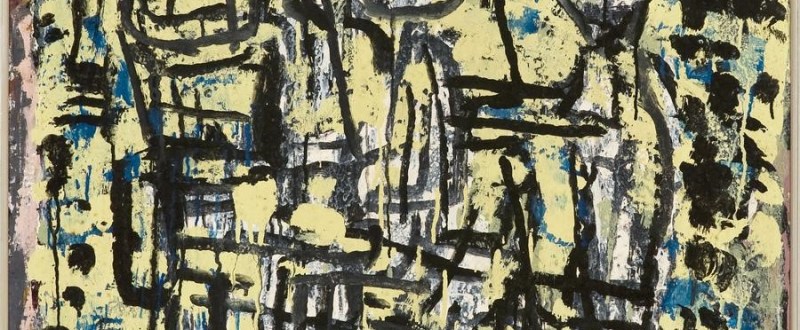
Image: Ian Fairweather, Figure Group IV (1970).

Ash Collins on the roman-fleuve

Join us for next week’s CuSPP seminar:

The Roman-fleuve and the Rebirth of the Author

Thursday 3 May, 1pm, Milgate Room, AD Hope Bldg, SLLL

Loosely comparable to earlier multi-volume works such as Balzac’s Comédie  Humaine and Zola’s Les Rougon-Macquart, the roman-fleuve was one of the most  prominent if short-lived literary trends in early twentieth-century France. These cyclical novels drew together a vast set of influences, from Homeric epic to the Russian novel, and were published in multiple instalments over the course of a decade or more. However, the term roman-fleuve itself is contested, and no one set of criteria for classifying these novels and delineating their place in the history of French literature has ever been agreed upon. In this paper I revisit the difficult task of definition by tracing the origins of the term back to Romain Rolland’s Nobel Prize-winning novel Jean-Christophe (1904‒1912). Drawing comparisons with the work of three of Rolland’s main contemporaries—Martin du Gard, Duhamel, and Romains—I then identify a series of commonalities which draw these authors together in a shared vision of the scope and role of literature. I explore how the unique challenges and opportunities the roman-fleuve presented were used to confront the unstable ground of modernity, from the horrors of war to the crumbling of metaphysical and religious certainties. Seeing in these writers a discourse around authorship and subjectivity that prefigures and subverts later discussions around the ‘death of the author’ in the work of Barthes and the poststructuralists, I outline how the roman-fleuve still has much to offer our understanding of the transformative potential of literary creation today.

Ash Collins is Lecturer in French Studies at the ANU.

Image: River Dordogne, France.