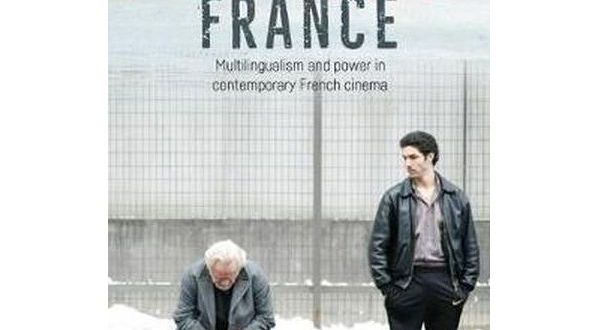
Join us to celebrate Dr Gemma King’s new book with Manchester University Press.
It’s on Monday 23 October at 4pm in the Tea Room, 4th Floor Baldessin Building, SLLL, ANU

Join us to celebrate Dr Gemma King’s new book with Manchester University Press.
It’s on Monday 23 October at 4pm in the Tea Room, 4th Floor Baldessin Building, SLLL, ANU
Thursday 19 October, 1pm Milgate Room, AD Hope Bldg, SLL
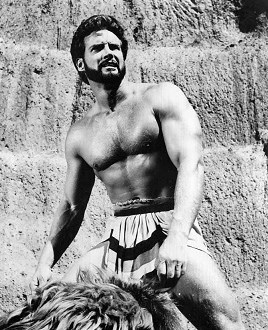
American interest in the ancient world took on a new life in the second half of the twentieth century, thanks largely to the Marshall Plan and the bourgeoning opportunities for US investment in the European film industry. The subsequent craze for ‘peplum’ films (or Sword and Sandal epics) marks an interesting intersection of economic pragmatism, a shift in US demographics, a crisis in Hollywood, and an intense struggle for the public recognition of the homoerotic.
Chris Bishop teaches in the Centre for Classical Studies, ANU. His most recent monograph, Medievalist Comics and the American Century was published last year by the University Press of Mississippi, who have subsequently asked him to contribute to a forthcoming collection on neoclassicism in comics (research for which forms the basis of this paper).

Presentation Workshop: A Toolkit for Getting the Most out of your 20 Minutes in Front of an Audience
Thursday 5 October, 1pm Milgate Room, AD Hope Bldg, SLL
This week’s seminar will be a seminar on seminars, a presentation on presentations. Led by SLLL staff members Dr Kate Flaherty and Dr Gemma King, staff, students, fellows and visitors are encouraged to share tips and ideas for making effective conference presentations. We will also discuss how we might tweak the Thursday Lunchtime Seminar for next year to make it relevant and accessible to staff across the various disciplines represented by SLLL.

Thursday 28 September, 1pm Milgate Room, AD Hope Bldg, SLL
The question of authorial intent looms large over literary studies. The influence of post-structuralist thought from Derrida to Barthes and the new criticism attempted to challenge the primacy of the author’s intention for the text. As critics we are still confronted with this problem in literary research, to what extent do we believe that there is authorial intent behind a text and how should this be dealt with in research? In these three short presentations we will discuss our responses to this problem in our research methodology. This heterogeneous roundtable will explore the (almost) inescapable presence of the author: Imogen researches Wiradjuri author Anita Heiss, Thomas studies Latin American short story anthologies from a world literature methodology, and Will applies linguistic literary analysis to the works of Liu Cixin. This inclusion of the author can be approached from a number of perspectives: how the author makes their intention known through the text, existing authorial commentary, oral interview methodologies, and how involving the author shapes the research project.
Imogen Mathew is a PhD candidate in SLLL. Her writing has been published in the Journal of the Association for the Study of Australian Literature (JASAL), Contemporary Women’s Writing, Australian Humanities Review and Australasian Journal of Victorian Studies (forthcoming 2017). Thomas Nulley-Valdés is a PhD student in contemporary Latin American literature in SLLL. For his doctoral research he has conducted over 25 interviews with contemporary Latin American authors and editors and has published some of these interviews. Will Peyton is a PhD candidate in Chinese literature and translation in SLLL. He completed his undergraduate studies in history at the University of Melbourne and has studied at the Renmin University of China, Peking University and the National Taiwan Normal University.

Thursday 21 September, 1pm Milgate Room, AD Hope Bldg, SLL
Gail Marshall contends that the Victorian-era actress was chiefly valued for her statuesque qualities – her stately stillness and blank beauty that linked her to classical culture, and exonerated her from the charge of artful self-fashioning. Helena Faucit was lauded for her embodiment of this Galatea aesthetic. The artless, sculpted-marble quality of her beauty was lauded as purity and, peculiarly for an actress, she was seen as a paragon of female virtue. In contrast, her American counterpart, Charlotte Cushman was known for her movement: she was an athletic physical performer, especially in male roles such as Hamlet and Romeo, and she travelled back and forth across the Atlantic and Pacific on tour. My paper uses these very different actresses to investigate the concepts of movement and mobility within public discourses of gender in the 19th century. Both actresses were widely acclaimed for their Shakespeare roles and both were described as moving audiences. However, the qualities attributed to their performances indicate contrary understandings of what constituted force, skill and truth in performance. I suggest that this reveals a micro-shift towards recognition of the expressive range and creative autonomy of the female performer which, in turn, transformed how Shakespeare’s plays could make meaning for the modern world.
Dr Kate Flaherty is Lecturer in English and Drama, SLLL. Her research focuses on how Shakespeare’s works play on the stage of public culture. Her monograph Ours as we play it: Australia plays Shakespeare (UWAP, 2011) examined three plays in performance in contemporary Australia. More recent work investigates Shakespeare on the colonial stage and the public interplay of the dramas with education and the politics of gender and empire.

Thursday 31 August, 1pm Milgate Room, AD Hope Bldg, SLLL
On 4 November 1818, some eight months after the anonymous publication of Mary Shelley’s Frankenstein, Dr Andrew Ure performed a series of galvanic experiments at Glasgow University on the body of Matthew Clydesdale, hanged for murder an hour earlier. According to Ure’s lurid account published in the 1819 Quarterly Journal of Science, the dead man resumed breathing, opened his eyes and appeared to gesture towards the terrified spectators. In this paper, however, I focus on Ure’s subsequent career as the first scientific consultant to industry and one of the principal theorists of the industrial revolution. Pilloried by Marx in Capital as the ‘Pindar of the Automatic Factory’, Ure was an influential advocate for the transformation, not only of the production process, but of the labouring body, by automatic machinery. Ure’s definition of the word ‘AUTOMATIC’ from his Dictionary of Arts, Manufactures, and Mines serves to link his electrical experiments and his theorisation of capitalist production:
AUTOMATIC: A term used to designate such economic arts as are carried on by self-acting machinery. The word is employed by the physiologist to express involuntary motions.
I want to explore Frankenstein, modernity’s most protean fable, as a text emerging from the reconceptualization of life and the living body in the industrial revolution, as matter that can be animated by forces such as electricity, and can thus be heightened, sustained, managed and disciplined – in a word, engineered – in the service of capitalist production.
Dr Russell Smith lectures in modern literature and literary theory in SLLL.

Thursday 24 August, 1pm Milgate Room, AD Hope Bldg, SLLL
Patrick White has been called a misogynist. My paper discusses to what extent this is the case. There is no denying that White’s male characters are drawn in much greater depth and more empathetically than his female characters. White’s initiate, that is, the one with the potential for growth and illumination is almost always male. However, paradoxically, many of White’s central concerns are also the fundamental concerns of feminism. A thread that runs through all his work is the acknowledgement and reconciliation of dualisms which have structured Western and Christian thought. Feminists have argued all along that binary oppositions such as mind/body, masculine/feminine, self/other – common in the cultural construction of reality – underlie women’s subordination for the inequitable valuation of their constituent terms results in a discriminatory conception of the ‘normal’.
Dr Jyoti Nandan is an Honorary Associate Professor in the School of Literature, Languages, and Linguistics, ANU. Her research has mainly been in the area of New Literatures in English. She has in the main employed a post-colonial feminist critical approach for the analysis of literary texts in this area..

Thursday 10 August, 1pm Milgate Room, AD Hope Bldg, SLLL
This paper takes as its queer object a serialised podcast. With its story about John B. McLemore, a clockmaker from Woodstock, Alabama, S-Town is a blockbuster success from the producers of Serial (2014-2016) and This American Life (1995-present) (the 7-part series was downloaded 16 million times in the first week of its release, with that number now exceeding 40 million). Against both affirmative and negative reception of S-Town—responses that tend to position the podcast either as transcending or as reproducing the idea of a backwards or lagging South—this paper argues that S-Town is an intermedial narrative incorporating various media that themselves comprise competing temporalities. Indexing these alternative temporalities are the intricate designs of clocks and sundials that tell of mythological time and seasonal and diurnal rhythms. There are also tattoos and other inscriptions that mark both bodies and sundials. My argument attends to the animate and inanimate forms narratively contained within the podcast, touching on Rebecca Schneider’s idea of ‘inter(in)animation’ and Elizabeth Freeman’s challenges to ‘chrononormativity’ in the process. From within this intermedial structure, John emerges as an intermediary whose engagement in processes of self-objectification and historical re-enactment complicates a normative timeframe and confounds conventional subject/object relations.
Dr Monique Rooney teaches literature, film and television in the School of Literature, Languages and Linguistics, ANU. Her current research explores the intermediality of the Australian ‘New Wave’ period.
The SEMESTER 2 2017 TLS lineup is now available.
Hope to see you on Thursdays at 1pm in the Milgate Room.
Thanks to Russell Smith for the organisation and for the gorgeous design work.

Thursday 27 July, 1pm Milgate Room, AD Hope Bldg, SLLL
Tony Harrison (1937 – ) is one of England’s greatest political poets, elegists, and verse dramatists of the 20th and 21st centuries, and the stature of his contribution to literature has been recognised by the canonisation of his poetry and prestigious awards. Harrison’s most famous poem is v. (1984), an urban elegy that satirizes its literary model, Thomas Gray’s Elegy Written in a Country Churchyard (1751). Where the poor remain silent and spoken for in Gray’s Elegy, v. unmutes the poor, and its giving voice to the rage of an illiterate Neo-Nazi skinhead led to Tory calls in the tabloids and in parliament for that ‘torrent of four-letter filth’ to be banned. Harrison’s poetry is highly allusive and revisiting this extraordinary poem, v., unearths new layers of meaning. This paper examines the importance for Harrison of the great 19th-century French poet Arthur Rimbaud (1854-91). It is in v. that Harrison most directly expresses an enduring identification with Rimbaud. To understand the political significance of Rimbaud’s presence in v.—and why Rimbaud is important for Harrison’s politics—it is important to keep in mind that Rimbaud was a Communard. The paper will explore the importance of the French radical republican tradition, in the form of the Paris Commune of 1871, for Harrison’s political thought and for the interpretation of Rimbaud in v. This state-of-the-nation poem suggests an alternative social model to neoliberalism in Britain and late capitalism by turning to the Communards—and Rimbaud as ‘the first poet of a civilization that has not yet appeared’—to illuminate utopian possibilities about how to ‘transform the world’ and to ‘change life’.
Dr Christine Regan is the author of The Rimbaud of Leeds: The Political Character of Tony Harrison’s Poetry (2016) and essays on Harrison’s life and work. She is developing a new study of contemporary poetry.
 cuspp.net