Lunchtime Seminar: Barbara Holloway on close reading, websites and content for the Anthropocene

‘How a Horse Faces a Hailstorm’: Close Reading, Websites

and Content for the Anthropocene


Thursday 3 November, 1pm Milgate Room, AD Hope Bldg, SLLL

In this paper I examine prose structures and government websites using critical reading practice to identify rhetorical and narrative devices common to both. Until now rarely used in evaluation of the digital interface, I argue such a reading identifies the site-visitor’s experience of continuity or of alienation in the transfer from page to web conventions, from ‘narrative’ to ‘interactive’ infrastructure.

I first place the paper culture of representations of three topics—environmental issues, place-relations and individual responsibility — historically, through prose of fiction (Stories of the Riverina, E. O. Schlunke 1965), instruction (Bush Fire Control in Australia, R. H. Luke, 1961) and non-fiction (David Lindenmayer, Woodlands: a Disappearing Landscape, 2005).

I then take these genres and topics to examine the interface of current Government websites of WA, NSW and the ACT. All dedicated to climate change, a close reading of them shows certain linear traditions of ‘paper’ communication are perpetuated in layouts and menu options. While rhetorical devices and figurative language remain as visual image and colour content, these too draw on material traditions.

Barbara Holloway is a Visiting Fellow in SLLL, researching the writers and natural history of South-West region of NSW for a publication on the makings of forest, literature and conservation. She has published research and creative nonfiction in various journals and collections and has an essay in the next issue of Fusion and a review in the Australasian Journal of Ecocriticism (of which she is an assistant editor).
Lunchtime Seminar: Thomas Nulley-Valdés on ‘Re-thinking McOndo’

Re-thinking McOndo

Thursday 27 October, 1pm Milgate Room, AD Hope Bldg, SLLL

It has been twenty years since the publication of the controversial pan-Hispanic short story anthology McOndo (1996). I propose a rereading of this text by analysing both the position of the authors in ‘world literary space’ (Casanova, 2004) and their position-takings within this space.

I propose that McOndo (1996) is an atypical anthology which should be considered a fundamental text in the broader project carried out by a whole generation of writers, to step out of the shadow of the Spanish American literary boom and the influence of Magical Realism, thereby creating a more autonomous literary space for Spanish American writers.
My talk will also incorporate twenty-seven interviews with some of the principal editors and authors, and an analysis of other significant texts such as Cuentos con walkman (1993), which serves as inspiration for McOndo (1996), and the short story anthology Se habla español: voces latinas en USA (2000) in order to consider the positions which these authors take, the critical and academic discourses they have provoked, and the effects these have had on the careers of the editors and participating authors.

Thomas Nulley-Valdés is a third year PhD student in the Spanish Programme in the School of Literature, Languages and Linguistics (SLLL). In 2016 he helped organise the conference “Our America: Past and Future of the New Latin American Fiction” Literature Colloquium at The University of South Florida, Tampa.

MASTERCLASS: ‘Tell Me Your Secret, Dr James’.

Students are invited to attend a masterclass given by Professor Ann Heilmann (Cardiff) on Tuesday 1 November at 10am in the Milgate Seminar Room, AD Hope, SLLL. The masterclass will be of interest to students working in literature and biography, biofiction, as well as those working in gender studies or studying transgender from a range of disciplinary backgrounds, including history, anthropology and philosophy.

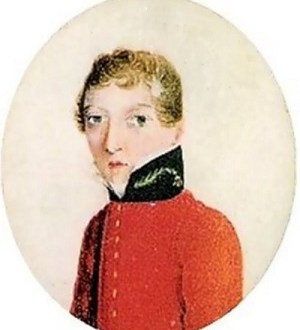
James Miranda Barry, a sensational transgender case of the nineteenth century

This masterclass takes as its focus a spectacular case of historical transgender to examine the resonance of notions of sex/gender instability in Victorian, twentieth century and contemporary depictions of James Miranda Barry (1789?- 1865). James Barry graduated in medicine from Edinburgh in 1812, entered the medical branch of the British military in 1813, and from 1816-1859 served as a medical officer, humanitarian and sanitary reformer in the British colonies (Cape Colony, Mauritius, Jamaica, Windward and Leeward Islands, St Helena, Malta, Corfu, and Canada). As Inspector General he attained the highest rank in the medical branch of the British military. After his death in 1865 sensational claims were made about his body having been that of a woman. It was not until the 1980s that evidence of Barry’s female birth identity was found.

How did Victorian contemporaries respond to these disclosures? Are there any similarities between Victorian and contemporary constructions of the figure of the gender crosser? How is transgender represented in textual format? Do biographers use different textual strategies from novelists and playwrights? These are some of the questions this two-hour session seeks to explore.

Please contact Dr Kate Mitchell if you’d like to take part in this masterclass, and in order to receive reading materials.

Lunchtime Seminar: Annelise Roberts on TOTEM I: trauma, materiality, and me

TOTEM I: trauma, materiality, and me

Thursday 20 October, 1pm Milgate Room, AD Hope Bldg, SLLL

The story of my grandfather’s involvement as test subject in the British Government’s nuclear testing program in South Australia provokes my creative enquiry into trauma, embodiment, and materiality. Confronting the events of Operation Totem at Emu Field – which have only been desultorily publicly commemorated – means confronting numbness and gaps in personal, familial and public knowledge and feeling, leading me to ask the following questions: How am I materially and discursively implicated in this massive injustice? And what does my implication suggest about the nature of embodiment? In this talk I outline my research proposal for this project and sketch out its engagement with trauma theories and new materialisms.

Annelise Roberts is a PhD candidate in creative writing at the School of Literature, Language and Linguistics. Her research interests include trauma, feminism, new materialisms, and life writing. She has previously worked in the community sector and trained as an anthropologist.

HRC Symposium: Assessing Research Impact Across the Humanities

A Symposium in the Humanities Research Centre, ANU

Wednesday 2 November, 9am – 12 midday, HRC Conference Room, A. D. Hope Bldg

Understanding research impact is now a priority for scholars in Australian universities, since the Australian Research Council is committed to assessing the public outcomes of university research. What will the assessment of research impact look like? And how might researchers approach research projects with integrity, such that their research is both intellectually rigorous and legible to an audience beyond their disciplines?

This symposium brings researchers from the UK with experience assessing and writing impact case studies to the ANU to discuss how research with impact has been produced and measured in England, and how Australian researchers can best position themselves to communicate their research to the public.

Speakers include Professor Ann Heilmann, Professor Maria Delgado and Professor Malcolm Gillies AM.

Register: https://publicknowledgeanu.eventbrite.com.au
Contact: lucy.neave@anu.edu.au for details.

Literature and Politics: A Public Talk by Amanda Lohrey

Literature and Politics: A Public Lecture by Amanda Lohrey

Thursday 20 October, 5.30 pm, Theatrette, Sir Roland Wilson Bldg

H.C. Coombs Fellow Amanda Lohrey will talk about whether fiction can make an effective political intervention. If the novel comes after the event and is a chronicle of, or argument with, a political event, does that mean that fiction is unable to shape such occurrences? Could fiction have a different role in more repressive societies, and achieve a form of symbolic power as a gesture of resistance, or fortify the morale of activists on the ground? To quote Marcuse, art by itself can never achieve transformation, but it can under certain circumstances ‘free the perception and sensibility needed for the transformation’. Amanda Lohrey’s lecture will look at the role of fiction and its ability to influence the political sphere.

Amanda Lohrey is the author of the acclaimed novels Camille’s Bread, Vertigo and The Morality of Gentlemen, as well as the award-winning short story collection Reading Madame Bovary. She has written two Quarterly Essays: ‘Groundswell’ and ‘Voting for Jesus’. In 2012 she was awarded the Patrick White Literary Award.

Enquiries: lucy.neave@anu.edu.au

Lunchtime Seminar: Gemma King on Contemporary French Cinema

Contemporary French cinema and the langue de passage

Thursday 13 October, 1pm Milgate Room, AD Hope Bldg, SLLL

Since the advent of sound cinema, the French language has been used to bolster conceptions of national identity in French film. Yet as multilingualism has become increasingly prominent in cinema, the representation of the French language has begun to shift. Having once occupied a hegemonic position as the sole language of value in most French films, French is being increasingly decentred to make way for a multitude of other languages, ranging from rival lingua francas like English to regional languages like Corsican and the languages of former French colonies, such as Arabic, Wolof and Bambara.

This paper proposes a new term for understanding the role national languages can play in film, using vocabulary from Abdellatif Kechiche’s 2007 film La Graine et le mulet to construct the idea of the langue de passage; a language of ‘passing’ or ‘passage’. In contemporary films about migration like Dheepan (Jacques Audiard, 2015) and Welcome (Philippe Lioret, 2009), French is a langue de passage; a language of critical, but temporary, value. These films thus resituate discourse on language and identity in French cinema and are responsive to the world within, across and beyond French borders.

Gemma King joined the ANU as Lecturer in French Studies in July 2016. Her research explores the relationship between language use and social power in French and Francophone cinema. She completed her PhD as a Cotutelle degree at the University of Melbourne and the Sorbonne Nouvelle: Paris 3 in 2015 and her book Decentring France: Multilingualism and Power in Contemporary French Cinema is forthcoming with Manchester University Press.

Theory Reading Group: readings and next meeting (4-6pm Friday 7 October)

Russell Smith’s TRG update, including details about readings for the next meeting:

We had a great session last week, dwelling at length on the various lines of inquiry suggested by William Davies’s incredibly compact and lucid essay, and covering all the ills of neoliberalist emotional life, from anxiety inducing children’s advertising to the deadening upbeatness of social media, from the hidden kinds of emotional labour to those horrible people on reality tv that you know you are being manipulated to hate. So much so, in fact, that we didn’t get around to discussing Illouz at all. However, we were agreed that discussing Cold Intimacies would be a VERY GOOD THING, and that we would do it in the next session, focussing on the first chapter ‘The Rise of Homo Sentimentalis’ and the third chapter ‘Romantic Webs’, in which she tests out her theory of a confluence between managerial theory, therapeutic discourse and liberal feminism in the twentieth-century’s invention of a new kind of entrepreneurial rationalist approach to one’s own emotional well-being. Sadly David Bissell won’t be with us this time, but if we go as slowly as last time, we’ll still be discussing Eva Illouz a fortnight later…

4-6pm Friday 7 October, in the first-floor common room, AD Hope room 113.


Lunchtime Seminar: Piera Carroli on Marilù Oliva’s Warrior Trilogy

La Guerrera – Marilù Oliva’s Warrior Trilogy

Thursday 6 October, 1pm Milgate Room, AD Hope Bldg, SLLL

Recognised as the Italian capital of noir, Bologna, still produces striking crime writers. Oliva belongs to the generation following Grazia Verasani and Carlo Lucarelli. She embodies today’s noir Bologna, at once continuing and revolutionising crime literature with the Trilogia della Guerrera [Woman Warrior Trilogy], the first multilingual transcultural series set in a refreshingly new Latin Bologna. The trilogy’s titles, ¡Tu la pagaràs! (2011) [You will pay for it], Fuego (2012) [Fire] and Mala suerte (2013) [Misfortune] and all salsa songs are in Spanish. Oliva transcends regional and national borders while continuing Italian crime fiction’s engagement with social issues: uncertain working conditions, immigration and violence against women. Although Oliva’s eclectic approach to genre, structure, style and content is not unusual in noir, what stands out, besides the unprecedented portrayal of Latin Bologna, is the choice of protagonist, languages, and investigative approach. Oliva’s knowledge of Spanish and Portuguese languages and cultures, and world mythology, along with Classical literature, including Dante’s Divine Comedy, allows her to add an unusual depth and breadth to her crime fiction. The trilogy constitutes an innovative noir itinerary into mezcla—an explosive anthropological mix—both material and esoteric, into Latin American music and dance, ancient magical Bononia besides present metropolitan Bologna. My research aims to bring Oliva’s work to the attention of academic communities by highlighting the innovative energy she brings to noir.

Piera Carroli is Senior Lecturer and Convener of the Italian Studies Program in SLLL. She has published on literature, applied linguistics and pedagogy. Her most recent work is on the representation of otherness and mezcla in Italian noir. She was interviewed on SBS Italian Radio about her research on Marilù Oliva.