Russell Smith: Frankenstein in the Automatic Factory

Frankenstein in the Automatic Factory

Thursday 31 August, 1pm Milgate Room, AD Hope Bldg, SLLL

On 4 November 1818, some eight months after the anonymous publication of Mary Shelley’s Frankenstein, Dr Andrew Ure performed a series of galvanic experiments at Glasgow University on the body of Matthew Clydesdale, hanged for murder an hour earlier. According to Ure’s lurid account published in the 1819 Quarterly Journal of Science, the dead man resumed breathing, opened his eyes and appeared to gesture towards the terrified spectators. In this paper, however, I focus on Ure’s subsequent career as the first scientific consultant to industry and one of the principal theorists of the industrial revolution. Pilloried by Marx in Capital as the ‘Pindar of the Automatic Factory’, Ure was an influential advocate for the transformation, not only of the production process, but of the labouring body, by automatic machinery. Ure’s definition of the word ‘AUTOMATIC’ from his Dictionary of Arts, Manufactures, and Mines serves to link his electrical experiments and his theorisation of capitalist production:

AUTOMATIC: A term used to designate such economic arts as are carried on by self-acting machinery. The word is employed by the physiologist to express involuntary motions.

I want to explore Frankenstein, modernity’s most protean fable, as a text emerging from the reconceptualization of life and the living body in the industrial revolution, as matter that can be animated by forces such as electricity, and can thus be heightened, sustained, managed and disciplined – in a word, engineered – in the service of capitalist production.

Dr Russell Smith lectures in modern literature and literary theory in SLLL.

Jyoti Nandan: White – A Misogynist?

Patrick White – A Misogynist? (With special focus on The Twyborn Affair)

Thursday 24 August, 1pm Milgate Room, AD Hope Bldg, SLLL

Patrick White has been called a misogynist. My paper discusses to what extent this is the case. There is no denying that White’s male characters are drawn in much greater depth and more empathetically than his female characters. White’s initiate, that is, the one with the potential for growth and illumination is almost always male. However, paradoxically, many of White’s central concerns are also the fundamental concerns of feminism. A thread that runs through all his work is the acknowledgement and reconciliation of dualisms which have structured Western and Christian thought. Feminists have argued all along that binary oppositions such as mind/body, masculine/feminine, self/other – common in the cultural construction of reality – underlie women’s subordination for the inequitable valuation of their constituent terms results in a discriminatory conception of the ‘normal’.

Dr Jyoti Nandan is an Honorary Associate Professor in the School of Literature, Languages, and Linguistics, ANU. Her research has mainly been in the area of New Literatures in English. She has in the main employed a post-colonial feminist critical approach for the analysis of literary texts in this area..

Monique Rooney: Queer Objects and Intermedial Timepieces: Reading S-Town

Queer Objects and Intermedial Timepieces: Reading S-Town (2017)

Thursday 10 August, 1pm Milgate Room, AD Hope Bldg, SLLL

This paper takes as its queer object a serialised podcast. With its story about John B. McLemore, a clockmaker from Woodstock, Alabama, S-Town is a blockbuster success from the producers of Serial (2014-2016) and This American Life (1995-present) (the 7-part series was downloaded 16 million times in the first week of its release, with that number now exceeding 40 million). Against both affirmative and negative reception of S-Town—responses that tend to position the podcast either as transcending or as reproducing the idea of a backwards or lagging South—this paper argues that S-Town is an intermedial narrative incorporating various media that themselves comprise competing temporalities. Indexing these alternative temporalities are the intricate designs of clocks and sundials that tell of mythological time and seasonal and diurnal rhythms. There are also tattoos and other inscriptions that mark both bodies and sundials. My argument attends to the animate and inanimate forms narratively contained within the podcast, touching on Rebecca Schneider’s idea of ‘inter(in)animation’ and Elizabeth Freeman’s challenges to ‘chrononormativity’ in the process. From within this intermedial structure, John emerges as an intermediary whose engagement in processes of self-objectification and historical re-enactment complicates a normative timeframe and confounds conventional subject/object relations.

Dr Monique Rooney teaches literature, film and television in the School of Literature, Languages and Linguistics, ANU. Her current research explores the intermediality of the Australian ‘New Wave’ period.

Christine Regan on Harrison, Rimbaud and the Communards

v. Revisited: Harrison, Rimbaud, and the Communards

Thursday 27 July, 1pm Milgate Room, AD Hope Bldg, SLLL

Tony Harrison (1937 – ) is one of England’s greatest political poets, elegists, and verse dramatists of the 20th and 21st centuries, and the stature of his contribution to literature has been recognised by the canonisation of his poetry and prestigious awards. Harrison’s most famous poem is v. (1984), an urban elegy that satirizes its literary model, Thomas Gray’s Elegy Written in a Country Churchyard (1751). Where the poor remain silent and spoken for in Gray’s Elegy, v. unmutes the poor, and its giving voice to the rage of an illiterate Neo-Nazi skinhead led to Tory calls in the tabloids and in parliament for that ‘torrent of four-letter filth’ to be banned. Harrison’s poetry is highly allusive and revisiting this extraordinary poem, v., unearths new layers of meaning. This paper examines the importance for Harrison of the great 19th-century French poet Arthur Rimbaud (1854-91). It is in v. that Harrison most directly expresses an enduring identification with Rimbaud. To understand the political significance of Rimbaud’s presence in v.—and why Rimbaud is important for Harrison’s politics—it is important to keep in mind that Rimbaud was a Communard. The paper will explore the importance of the French radical republican tradition, in the form of the Paris Commune of 1871, for Harrison’s political thought and for the interpretation of Rimbaud in v. This state-of-the-nation poem suggests an alternative social model to neoliberalism in Britain and late capitalism by turning to the Communards—and Rimbaud as ‘the first poet of a civilization that has not yet appeared’—to illuminate utopian possibilities about how to ‘transform the world’ and to ‘change life’.

Dr Christine Regan is the author of The Rimbaud of Leeds: The Political Character of Tony Harrison’s Poetry (2016) and essays on Harrison’s life and work. She is developing a new study of contemporary poetry.

Lunchtime seminar: Imogen Mathew on How Anita Heiss Rewrites the Public Intellectual

Anita Heiss Rewrites the Public Intellectual for 21st Century Australia

Thursday 27 July, 1pm Milgate Room, AD Hope Bldg, SLLL

Aboriginal intellectual interventions in contemporary Australia come in many shapes and sizes, from the @IndigenousX twitter account to Stan Grant’s 2015 IQ2 Racism address. My research gives one account of how these interventions play out in the Australian public sphere through an extended case study of Anita Heiss, a Wiradjuri woman from Central NSW. Heiss is an author, academic, activist and—as I argue in my thesis—public intellectual. My thesis is structured around two of Heiss’s most important interventions in the Australian public sphere, her commercial women’s fiction and her role in the 2011 court case Eatock vs Bolt, where Herald Sun journalist Andrew Bolt was found guilty of Racial Discrimination. These interventions may appear to have little in common yet Heiss pursues the same argument in each, that the rich diversity of Aboriginal life and experience far exceeds the limited stereotypes that animate the Australian imagination. My research extends beyond a close reading of the court case and her commercial women’s fiction to incorporate a reception study of Heiss’s interventions. To this end, I examine user-generated reviews of Heiss’s literary output in what Simone Murray calls ‘the digital literary sphere’. The original contribution made by this project is two-fold. On one hand, I present the first sustained academic account of Heiss’ fiction and its reception. On the other, I contribute to ongoing debates about the role of the Public Intellectual, particularly as she is interpreted and constructed in 21st century Australia.

Imogen Mathew is a PhD candidate in SLLL. Her writing has been published in the Journal of the Association for the Study of Australian Literature (JASAL), Contemporary Women’s Writing, Australian Humanities Review and Australasian Journal of Victorian Studies (forthcoming 2017).

Literary giveaway: Gemma King in conversation with Stephanie Smee

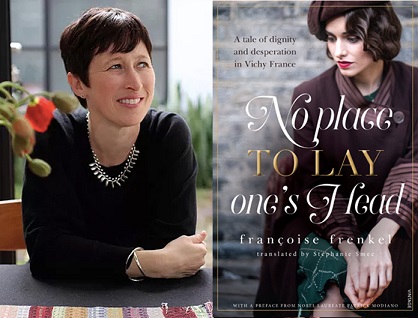
A bitter, beautiful & important book. So says Robert Fisk of the rediscovered French sensation, No Place to Lay One’s Head. Originally published in 1945 in Geneva, it tells the story of the flight from Vichy France of Polish Jew Francoise Frenkel. Meet the talented translator of this book, Stephanie Smee, in conversation with ANU’s Dr Gemma King, at Muse Canberra, Sun 25 June, 3-4pm. [http://www.musecanberra.com.au/events/2017/5/15/stephanie-smee-no-place-to-lay-ones-head]

For your chance to win one of two double passes to the event, email contact@musecanberra.com.au with subject line CuPSS_Smee. Note only winners will be notified.

Lindiane Vieira: Dynamics of Placement and Displacement

Dynamics of Placement and Displacement in Doris Pilkington’s Under the Wintamarra Tree. Once a ‘Subaltern’, Always a ‘Subaltern’?

Thursday 8 June, 1pm Milgate Room, AD Hope Bldg, SLLL

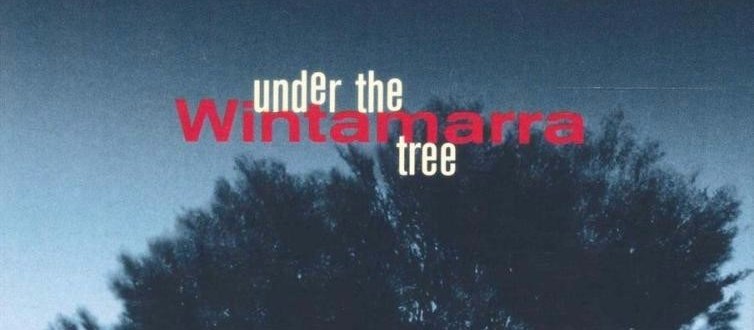
Doris Pilkington’s Under the Wintamarra Tree (2002) is a sequel to Follow the Rabbit-Proof Fence (1996), in which we are presented with a story in a confessional tone that reveals the adventures of three indigenous girls (including Doris’ mother Molly) who fled the “Native” settlement that they were forcibly taken to. Both narratives are valuable representations of the ‘stolen generations’ in Australia. In Follow the Rabbit-Proof Fence we are mostly presented with Molly’s story. In Under the Wintamarra Tree, Doris reveals her own story in which, through acts of resistance and resilience, she appears to embrace her displaced condition in order to come to terms with her own identity and cultural heritage. The dynamics of placement and displacement are here analysed through a postcolonial perspective. The ‘stolen generation’ is the consequence of domineering and imperialistic acts in which “half-caste” or “mixed race” children were strategically taken away from their families in indigenous communities and placed in “Native” settlements where they were trained and educated to be servants to white families. I make use of Gayatri Spivak’s term the “subaltern” in order to reflect upon Doris’s life and how it had to be constantly renegotiated until, through her writings, she divulged her stories to the world. In such a way, her voice can never be silenced, but serves as a representation of the many lives of displaced peoples around the globe who have been manipulated within the prerogatives of ruthless power.

Lindiane Vieira is currently a Research Fellow at SLLL. She has been working on the project Locating the Displaced: The Female Experience of Migration and Displacement in Contemporary Literature.

Invitation: Bloomsday in Canberra

Along with Neville Potter, a PhD graduate of SLLL, Russell Smith has been involved in organizing an event for Bloomsday, the annual celebration in honour of James Joyce’s novel Ulysses (1922), set on Thursday 16 June 1904. The event will take place not on Bloomsday itself (purists be warned) but on the night before, which happens to be a Thursday, 15 June 2017, at the Irish Club in Canberra, and will feature readings from the novel, songs and Irish music, and a two-course dinner. Please find the poster here, distribute this widely and make sure to book early!

Lunchtime seminar: Mabel Cuesta on Lydia Cabrera

Lydia Cabrera: Ethnography and Forbidden Desires

Thursday 1 June, 1pm Milgate Room, AD Hope Bldg, SLLL

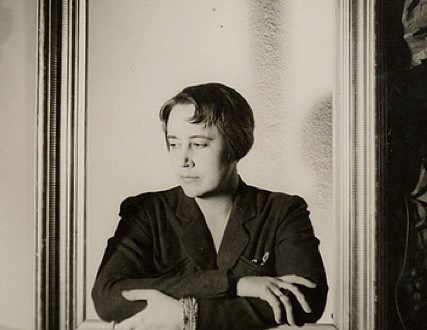
Lydia Cabrera (1899-1991), the most important ethnographer and folk writer in the Cuban archive, was an exile in the United States for the last thirty years of her life –previously she lived in Paris, Madrid, and Havana. In all these cities, she was able to engage well-known female artists and writers who were lesbians as herself and whose financial and emotional support allowed Cabrera to better survive in the homophobic societies she was always living in and struggling against in order to survive as a respected scholar and fiction writer despite her sexual desires. My project will argue that those lesbian and ultimately female alliances are the ones that better served and financially supported Cabrera’s intellectual ambitions.

This presentation is part of a book project that explores the significance of the emergence of these alliances by analysing the traditional mythical connection established between woman and island, as well as the identities produced by female writers who had been historically silenced in Spanish Caribbean fiction, as well as in the anthropological work mostly produced by male scholars. In this regard, I have paid close attention to the treatment of homoerotism, exile, ethnicity, patriotism and the birth of feminism as a tool to confront the male power as well as its alliances with colonial practices.

Dr Mabel Cuesta is Associate Professor of US Latino and Caribbean Literature at the University of Houston.