Lunchtime Seminar: Jürgens on Scientists and Australian Imagination

Non-Scientists, Con-Scientists and the Rocky Horror Clown Show: Wondrous Science in the Australian Context

Thursday 23 March, 1pm Milgate Room, AD Hope Bldg, SLLL

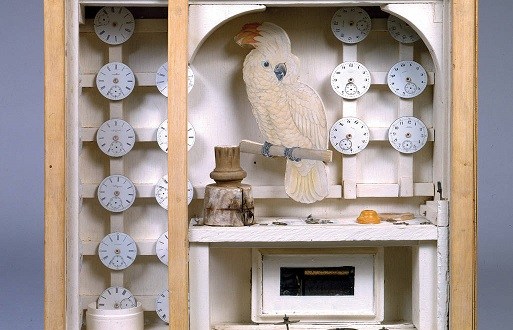
Scientists seek to explore how nature works and ask how humanity can best comprehend different aspects of the world. In fictional and cultural contexts, scientists appear as rebels against the status quo and the ordinary. In the collections of the National Library of Australia, literary scholar Anna-Sophie Jürgens has discovered that some scientists even behave like artists: they are creative, skilled craftsmen, ‘imagineers’ or bewildering performers. By revealing how fictional and fictitious scientists do not merely domesticate the unknown, but also invent and stage it, she will provide new insights into the connections between scientific knowledge and the creative imagination in Australia.

Anna-Sophie Jürgens is a Humboldt postdoctoral fellow currently working “On the Origin and Evolution of a Species: Australian Scientists in Fiction”. She studied Comparative, Russian and French Literature in Germany and Russia. Her research interests include science in fiction, modern and contemporary circus fiction, the history of (violent) clowns, and aesthetics and poetologies of knowledge.

Gemma King at the French Film Festival

On March 16th, Gemma King (School of Literature, Languages and Linguistics, ANU) will be giving a Q&A after the film A Kid (Le Fils de Jean, Philippe Lioret). Before the film, there will be wine and cheese, and the event is being sponsored by the High Commission of Canada (the High Commissioner will be in attendance).

Gemma King’s second Q&A is on March 29th after the film Farewell, My Queen (Les Adieux à la Reine, Benoît Jacquot). At the reception beforehand, there will be sparkling wine and macarons, and the film is designed to tie in with the current Versailles exhibition at the National Gallery.

To book tickets for these events and to find more information about the festival, taking place this month, go to: http://www.affrenchfilmfestival.org/schedule.

Cfp: Australian Society for French Studies Conf: Truth and Representation

Australian Society for French Studies Conference 2017: Truth and Representation

The Australian National University, 13-15 December

Confirmed keynote speakers:
Professor Nicki Hitchcott, University of St Andrews
Dr Chris Watkin, Monash University

What is truth and how do we represent it? For centuries philosophers, artists, theologians, and political thinkers have reflected on the nature of truth, each exploring the various rhetorical and visual strategies with which we might render its universality and its relativity. When we talk about truth, we call upon objectivity, authenticity, and verifiability. But we also inevitably evoke subjectivity, artifice, and mendacity. Indeed, to talk about truth is to recognise its intimate connection to lies.
In our current political climate, terms such as ‘post-truth’ and ‘fake news’ have become ubiquitous. In the wake of Brexit and the American presidential election, and leading up to the 2017 French election, politicians and the media continually call the status of truth and representation into question. How are we to determine what truth is when facts are manipulated to reflect and reinforce the opinions we already hold? How are we to retain our grasp on reality when we see our world increasingly through the mediation of the screen? Such questions bring to mind a much broader problematic surrounding our understanding of social, cultural, and political reality in the light of myriad and ever-evolving ideologies and theoretical orientations.
This conference seeks to reflect on these questions within French and Francophone Studies. What role can our interdisciplinary research play in negotiating the problems of truth and representation in the 21st century, from cultural studies and politics to literature and film? Our aim is to address these problems from a multiplicity of methodological approaches and areas of focus.
We invite proposals for individual papers (20 minutes) and for panels (3-4 papers of 20 minutes each) related to the theme of truth and representation. We will also consider proposals that do not conform directly to this theme. Possible topics for discussion may include, but are not limited to:

• Philosophical, theoretical, and historical/historiographical understandings of truth-making
• Representations of Otherness
• Reflections on language and the shaping of political discourse
• The role of truth in education, including plagiarism and academic dishonesty in the language classroom
• Film and the fluid boundaries of audio-visual representation
• Embodied truths, psychic truths, lived realities
• National myths and the politics of migration
• Life-writing/ Representing the truth of the self
• Truth and religious pluralism
• Postmodernism and post-truth
• Representation in (applied) linguistics and second language acquisition
• Imagination, or the truth of fiction
Please send your proposal of 250 words for papers in English or French to asfs_2017@anu.edu.au by 3 July 2017.

Organising committee: Leslie Barnes, Ashok Collins, Solène Inceoglu, and Gemma King, ANU.

HRC Seminar: Jane Simpson on language in fantasy novels

‘Constrained Creativity: Towards a Natural History of Language in Fantasy Novels’

Professor Jane Simpson (ANU)

Seminar Room 2/3, Sir Roland Wilson Bldg, ANU, Tuesday March 14, 2017, 4.30-5.45 pm

Any fiction writer creates an alternate world, but in some genres, the alternate world is intended to be different from the novelist’s own society. This is most noticeable in science fiction, historical novels, fantasy novels, steampunk, and novels set in non-English speaking countries. Creating a believable alternate world involves paying attention to the languages spoken by the characters, and the place of languages in the world. The characters may speak different languages from each other and from the readers (‘alternate world languages’, AWLs, a type of ‘conlang’), but this must be represented through the language of the readers (the conceit of translation). Within this limitation, writers have some freedom to use words, phrases and sentences that readers won’t know, whether invented, archaic or from another language. These have communicative, symbolic and aesthetic functions.
Can we use the fragments of invented languages in novels as evidence of anything of interest to linguists? I suggest that the answer is a qualified ‘yes’, based on a survey of 50 novels, with more detailed study of three novels, along with consideration of parodies of fantasy novels, and discussion of reception, and comparisons with Peter Carey’s “Ned Kelly” and Dylan Coleman’s “Amazing Grace.”

LSSS Schedule

The schedule for the Literary Studies Seminar Series is now available here.

Hope to see you on Thursdays at 1pm in the Milgate Room.

Thanks to Russell Smith for the organisation and for the magnificent design work.

CuSPP Writing Group

Come along to the CuSPP Writing Group.

It takes place in the A.D. Hope Common Room (Room 113) from 10am each Monday of semester. We begin with an hour but we have the room for two. Please bring along the hot drink and writing apparatus of your choice.

Many thanks to Gemma King for her organisation and graceful time-keeping of the writing groups thus far.

HRC seminar: Srilata Ravi (U of Alberta) on diasporic travel writing

‘Out of Place’: Diasporic travel writing and the impossibility of return

Professor Srilata Ravi (University of Alberta)

Seminar Room 2/3, Sir Roland Wilson Building, ANU, Tuesday March 7, 2017, 4.30-5.30pm

In the last fifty years forced and unforced migrations have resulted in some of the greatest upheavals and displacements seen in history. Refugees, economic migrants, and political exiles have moved away from their geographical places of origin to settle in foreign places, carrying with them (in multiple forms and to different degrees) memories of their past, tensions in the present and aspirations for their future.

While such movements have very often resulted in permanent dislocations, rapid developments in communication technologies and affordable transportation have provided some members of these dispersed communities the opportunity of “looking back” or returning (temporarily, repeatedly or permanently) to their homelands—to places “left behind” in the course of their migration. Through a reading of selected travel texts in the French language, this paper will examine how the affective consequences of such diasporic returns are textualized.

Srilata Ravi is Professor of French and Francophone Literature at the Faculté Saint-Jean of the University of Alberta. Her research interests are in Francophone Postcolonial Studies, Diaspora Studies and Indian Ocean Studies. Her recent publications include Translating the Postcolonial in Multilingual Contexts (with Judith Misrahi-Barak, in press); Sports, modernité et réseaux impériaux : Napoléon Lajoie, Kumar Shri Ranjitsinhji, baseball et cricket au tournant du XXe siècle (with Claude Couture, 2017); Rethinking Global Mauritius: Critical Essays on Mauritian Literatures and Cultures (2013); and Ecritures mauriciennes au féminin: penser l’altérité (with Véronique Bragard 2011).

Cfp: Movement(s) and Mobility symposium

Call for papers: “Movement(s) and Mobility”: Gender Studies Symposium 2017, jointly sponsored by Nanyang Technological University (NTU), Australian National University (ANU) and University of South Australia (UNISA).

This gender studies symposium will take place at NTU on June 2 & 3, 2017
Contact person: Wernmei Yong Ade wmyong@ntu.edu.sg

“Movement(s) and Mobility” is a Gender Studies Symposium that seeks to glean the intersections between gender, movement(s) and mobility, to suggest ways in which these intersections might challenge or subvert existing power-asymmetries in the production of individual agencies, gender identities and ideologies. Understood most readily as physical motion between points in space, movement is thus both relational and relative, whose point of reference can potentially be decentered. Mobility, on the other hand, refers to the conditions that enable movement, a paradigm that begs questions of representation and language.

Unsurprisingly then, movement and mobility have deep connections with gender, the latter being a concept far from static or fixed; as construct, gender is itself highly mobile and often implied in issues of mobility.

As such, this symposium is also keen to examine the how the intersections between gender, movement(s) and mobility might give rise to new shifts in the way gender is constituted, essentially rethinking gender and its significance in the context of rapid global change and movement. This symposium is primarily interested in, but certainly not limited to, examining these intersections in the following:

Technology and augmented movement; Political and activist movements; Transnational literary representations of movement and mobility; Travel narratives; Performance and performance art; Virtual and imagined movement; Immigration and emigration; Displacement, refugees, and asylum; Trauma Studies; Disability Studies; Ethics, inter-relational capacities; Ability, agency, and accessibility; Daily mobility; Social, political, and economic movement and mobility; Collective and mass movement; Movement between urban and rural spheres.

Please submit abstracts of 300-500 words for 20 minute presentations to wmyong@ntu.edu.sg no later than March 31, 2017 to be considered.
Successful applicants will be notified within two weeks of submission deadline. Please also include a short biography of approximately 50 words.

Cfp: Thursday Lunchtime Seminar (TLS)

There are only 4 posts left: 17 August, and 5, 19 and 26 October. Book now to avoid disappointment! Contact russell.smith@anu.edu.au to reserve your place.

Next semester’s program will run from Thursday 27 July to Thursday 9 November. Places on the Thursday Lunchtime Seminar program are open to SLLL staff, graduate students, visiting fellows and visiting scholars from other schools in the ANU, and from other institutions in Canberra and around the world. The seminar especially encourages researchers to present work in progress – draft chapters or trial-run conference papers – for engaged and collegial feedback and discussion. Seminars are from 1-2 Thursdays in the Milgate Room, first floor A D Hope Building.

Staff, students and visitors of ANU, University of Canberra and ADFA are encouraged to attend and to present work-in-progress for lively and collegial feedback and discussion – on any topic ranging from literary studies to film to cultural studies to gender and sexuality and beyond…

In particular, please encourage graduate students and school visitors to attend and to present their work. Please feel free to get in touch if you have any questions.

Russell Smith: russell.smith@anu.edu.au