Ann-Sophie Levidis, “Poetic Rebellions: Kanak and Maori Writings in the Atomic Pacific.”

Please join us for CuSPP Seminar in person (ADH Conference room) and online on Thursday, 26 September from 1-2pm. Please refer to the CuSPP email or email Wesley.Lim@anu.edu.au for the link.

Image:

Déwé Gorodé in Melbourne, Australia in 1987. The text on the whiteboard reads: “My country is Kanaky” in her language Paicȋ, from the customary region of Paicȋ-Camuki

Abstract:

In this presentation, we explore the literary contributions of Déwé Gorodé and Chantal Spitz, originating from the former French colonies of New Caledonia and Polynesia, respectively. These authors inhabit a unique space within Francophone literature, one that vehemently diverges from the colonial narrative, embodying a potent political discourse that challenges the vestiges of colonization. This investigation is contextualized through the lens of Jean-Paul Sartre’s 1948 assertion, which posits the necessity for a cultural and intellectual decolonization—a rebirth from the ashes of colonial imposition towards an authentic self-representation.

The core of our analysis seeks to interrogate the mechanisms through which Gorodé and Spitz navigate their post-colonial identity, endeavoring to purge the colonial discourse embedded in their cultural heritage. Central to our inquiry is the examination of how these authors construct a narrative that eschews the colonial legacy, engaging in a literary renaissance that is both original and personal. This entails a rigorous critique of the stereotypes perpetuated by Western literature regarding their nations, thereby reclaiming the narrative sovereignty of their cultures.

Furthermore, this presentation probes into the existential and ontological dilemmas posed by the quest for a liberated voice. It scrutinizes the methodologies through which these authors articulate the multifaceted trauma of colonialism, the quest for a post-colonial identity, and the unbearable weight of historical subjugation. A pivotal aspect of our discourse centers on the relationship with language, exploring how Gorodé and Spitz establish a subversive dialogue with their linguistic heritage, thereby crafting a space for resistance and self-definition.

Through this academic exposition, we aim to shed light on the transformative power of literature as a vehicle for cultural emancipation and identity reclamation in post-colonial contexts. The subversive use of language emerges not merely as a stylistic element but as the linchpin of their literary resistance, offering profound insights into the dynamic interplay between language, identity, and decolonization.

Bio:

Ann-Sophie Levidis is a lecturer in French Studies at the Australian National University and a research associate at UMR 8138 SIRICE (Sorbonne – Identités, relations internationales et civilisations de l’Europe), Paris I  and the The Weatherhead Research Cluster on Global History, Harvard. Her first book A Sphynx of Saigon. French War Crimes Trial Policy and the Colonial Origins of International Law will be forthcoming at Cambridge University Press next year. Her second book, The Land Where Decolonization Never Came: The Indigenous Quest for Statehood, Sovereignty, and Environmental Justice in the Atomic Pacific, is in pre-contract with North Carolina University Press.

Sally Bushell (Lancaster University), “Digital Literary Mapping: A Chronotopic Approach or, How to Journey Through the Looking Glass with Alice”

Please join us for CuSPP Seminar in person (ADH Conference room) and online on Thursday, 8 August from 1-2pm. Please refer to the CuSPP email or email Wesley.Lim@anu.edu.au for the link.

Abstract:  This paper presents new ways of mapping literature by means of digital tools for the Twenty-First Century emerging from a major funded project for mapping literary timespace (Chronotopic Cartographies).  It argues for the mapping of space relationally in non-referential ways by means of “literary topology”.  It articulates an integrated visual-verbal method of interpretation that combines the close reading of spatial meanings and structures within a text with analysis of the map series generated out of that same text, in an iterative structure.  The second half of the paper puts theory into practice through a visual-verbal reading of Lewis Carroll’s Through The Looking-Glass and What Alice Found There.

Biography: Sally Bushell is Professor of Romantic and Victorian Literature in the Department of English Literature & Creative Writing, Lancaster University in the UK.  She is currently a Visiting Professor at ANU funded by the RSHA.  Her research is concerned with literary spatiality and the mapping of texts in a range of ways (across process; empirically; digitally). She is also interested in digital and spatial projects for the mapping of literature. She was PI on the AHRC Funded project: Chronotopic Cartographies and the AHRC Follow On Fund project Steampunk Sherlock Holmes in Minecraft. She co-creator of an educational project (Litcraft) that re-engages reluctant readers with reading by using Minecraft to map literary worldsHer most recent books are: Reading and Mapping: Spatialising The Text (Cambridge, 2020) and New Approaches to Digital Literary Mapping: Chronotopic Cartography (Forthcoming, Cambridge Elements series, 2024).

Meindert Peters (Oxford), “Dancing Modernist Literature”

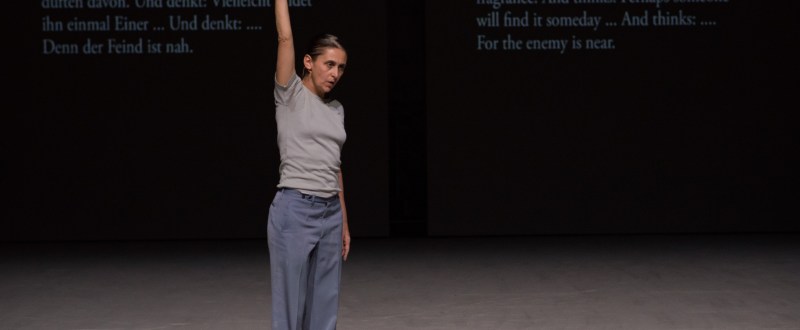
DK image: Die Weise von Liebe und Tod des Cornets Christoph Rilke, Rosas, © Anne Van Aerschot

Please join us for CuSPP Seminar in person (ADH Conference room) and online on Wednesday, 31 July from 5-6pm. Please refer to the CuSPP email or email Wesley.Lim@anu.edu.au for the link.

Abstract: Dance adaptations of modernist works by authors such as Rainer Maria Rilke, Thomas Mann, and Virginia Woolf have been thriving in the last twenty years. Why? Modernist literature’s exploration of the mind and its experiments with language seem at odds with the non-verbal medium of dance and its emphasis on the body and movement. By turning to this untold history of dance adaptations, Meindert Peters’s current research project ‘Dancing Modernist Literature’ generates a new understanding of the reception and continuing relevance of modernist literature in the twenty-first century.

These dance adaptations have uniquely foregrounded the moving body in quintessential modernist concerns, for example over identity. When Franz Kafka’s Gregor Samsa turns into a vermin overnight, for example, Arthur Pita’s 2011 ballet adaptation of The Metamorphosis emphasizes how he tumbles and falls, tests his physical abilities, and reaches new heights. Samsa’s alterity is not merely psychological but also bound up with corporeal pleasure and pain. My research centres around this corporeality, examining the twofold role bodily movement plays in modernist literature’s enduring legacy and appeal. The dance adaptations I explore reveal that the figure in motion and flux is an important subject of these literary texts, complicating modernist concerns over more intangible issues such as identity and language. And they show how the dancing body can be a powerful medium for rearticulating modernist narratives.

In this research talk, Peters discusses some of this work, including his practical work with choreographers.

BIO:

Meindert Peters is Leverhulme Early-Career Fellow in German and Performance and Junior Research Fellow at New College, both at Oxford. His first book entitled Habituation in German Modernism (Camden House, 2024) explores early 20th-century imaginaries around habit and skill. His current book-length project Dancing Modernist Literature (under contract with Edinburgh University Press) looks at 21st-century dance performances of European modernist literature in theory and practice. He is editor of Brill’s Bodies and Abilities book series, co-curator of the Kafka: Making of an Icon exhibition in Oxford and New York, and a former professional (ballet) dancer, choreographer, and teacher.

Wesley Lim (Book Launch), “Dancing with the Modernist City: Metropolitan Dance Texts around 1900”

Please join us for a TRN and CuSPP Seminar in person (ADH Conference room) and online on Thursday, 25 July from 1-2pm. Please refer to the CuSPP email or email Wesley.Lim@anu.edu.au for the link.

Meindert Peters (Oxford), RSHA external visitor, will be in conversation with Wesley Lim about the book.

In-person attendees will receive a small token of Wesley’s appreciation 😊.

Abstract:
As the 20th century dawned, authors, artists, and filmmakers flocked to cities like Paris and Berlin for a chance to experience a bustling urban life and engage with other artists and intellectuals. Among them were German-speaking authors and filmmakers such as Harry Graf Kessler, Rainer Maria Rilke, August Endell, Alfred Döblin, Else Lasker-Schüler, Segundo de Chomón, and the brothers Max and Emil Skladanowsky. In their writing and artistic work from that period, they depicted the perpetual influx of stimuli caused by urban life—including hordes of pedestrians, bustling traffic, and a barrage of advertisements—as well as how these encounters repeatedly paralleled their experiences of watching early twentieth-century dance performances by Loïe Fuller, Ruth St. Denis, and Vaslav Nijinsky. The convergence these writers and filmmakers saw between the unexpected encounters during their urban strolls and modern dance performances led to writings that interwove the two motifs. 

Drawing on cultural, literary, dance, performance, and queer studies, Dancing with the Modernist City analyzes an array of material from 1896 to 1914—essays, novels, short stories, poetry, newspaper articles, photographs, posters, drawings, and early film. It argues that these writers and artists created a genre called the metropolitan dance text, which depicts dancing figures not on a traditional stage, but with the streets, advertising pillars, theaters, cafes, squares, and hospitals of an urban setting. Breaking away from the historically male, heteronormative view, this posthumanist mode of writing highlights the visual and episodic unexpectedness of urban encounters. These literary depictions question traditional conceptualizations of space and performance by making the protagonist and the reader feel like they embody the dancer and the movement. In doing so, they upset conventional depictions of performance and urban spaces in ways paralleling modern dance.

https://press.umich.edu/Books/D/Dancing-with-the-Modernist-City2

Wesley Lim is Lecturer in German Studies at the Australian National University. His research focuses on the intersection of Dance Studies, Performance Studies, and Screen Studies. Wesley’s next two book projects deal with Asian sporting masculinity in contemporary figure skating and East German figure skating cultures.

Sofya Gollan (TPR), “Silencing Deaf Stories: Hearing Portrayals of Deafness and the use of Sign Language on Contemporary Screens”

Please join us for a CuSPP Seminar in person (ADH Conference room) and online on Thursday, 18 July from 1-2pm. Please refer to the CuSPP email or email Wesley.Lim@anu.edu.au for the link.

Abstract:

The aim of my creative practice-based research is to explore how aesthetics of silence as used by hearing filmmakers in their narratives of deaf characters serve as a form of erasure and how this influences the presentation of sign language on screen. While silence is one of many defining elements of ‘not hearing’, I argue that in many screen treatments of Deaf characters and narratives the use of silence functions as a system of subjugation, with the perceived absence of sound conflated to the absence of personhood and voice.  A literal ‘silencing’.

“Most people who have hearing are unwilling to believe that a deaf life can be as good as a hearing life. Because they would not want to experience the trauma of hearing loss, they cannot easily reconcile themselves to Deaf Gain.” (Baumann, H-Dirksen: Deaf Gain: Raising the Stakes of Human Diversity: 11)

Using the tools of Deaf Critical theory I will show that hearing writers and directors embrace assumptions that being Deaf equates to living in a world of silence and isolation. I will use the precept of Deaf Gain to interrogate that presumption of silence as a deficit, in order to reframe Deaf people as fully humanised characters onscreen and in culture.

“..deafness has nothing to do with ‘loss’ but is, rather, a distinct way of being in the world, one that opens up perceptions, perspectives and insights that are less common to the majority of hearing persons.” (Baumann, H-Dirksen)

Bio: Sofya Gollan is a filmmaker, actor and writer with over 20 years of experience in the Australian film industry. Her films include Gimpsey (2016) and Imagined Touch (with Jodee Mundy, 2022) with a new film Threshold (2023) screening at the Museum of Contemporary Art, Australia and in festivals worldwide. She is a PhD candidate at the ANU working on a creative practice doctorate about Deaf-led filmmaking, which asks “in whose hands” sign language cinema belongs.

Peter DeGabriele (Mississippi State University), “Sovereign (Ir)responsibility: Hobbes among the Drones”

Please join us for another CuSPP Seminar in person (BPB W3.03) and online on Thursday, 23 May from 1-2pm. Please refer to the CuSPP email or email Wesley.Lim@anu.edu.au for the link.

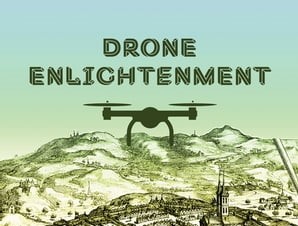
https://www.upress.virginia.edu/author-corner/authors-corner-with-peter-degabriele-author-of-drone-enlightenment/

Abstract: Shuttling between analyses of a 2012 series of memes entitled “Texts from Drone” and the philosophy of Thomas Hobbes and John Locke, this talk will explore how enlightenment theories of moral responsibility and causation relate to contemporary drone warfare. Ultimately, it argues, only an externalist account of causation combined with a Hobbesian account of sovereignty is adequate to understand the political significance of drone warfare.

Bio: Peter De Gabriele graduated from the Australian National University in 2002 with a B.A in Women’s Studies (Hons) and Film Studies before receiving his Ph.D in English from The University at Buffalo-SUNY in 2009. His first book, entitled Sovereign Power and the Enlightenment: Eighteenth Century Literature and the Problem of the Political was published by Bucknell University Press in

Jéssica Andrade Tolentino and Thomas Nulley-Valdés, “Navigating Boundaries: Intergenerational dynamics and imaginaries of childhood in Alejandro Zambra’s fictions”

Please join us for another CuSPP Seminar in person (BPB W3.03) and online on Thursday, 9 May from 1-2pm. Please refer to the CuSPP email or email Wesley.Lim@anu.edu.au for the link.

Abstract:

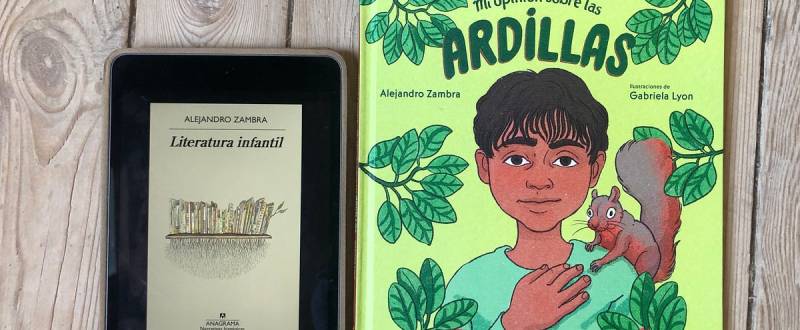
As part of doctoral research conducted at the Australian National University, this presentation proposes a comparative analysis of two works by the contemporary Chilean writer Alejandro Zambra. Focusing on close readings of the book of hybrid texts, Literatura infantile (Children’s Literature) (Anagrama, 2023), and his first book for children, Mi opinión sobre las ardillas (My Thoughts on Squirrels) (Ekaré Sur, 2022), we will discuss how Zambra’s literary discourse constructs the categories of childhood and adulthood, and explore the role of intergenerational and transnational dynamics in these works. By analysing the shift in perspective —such as the viewpoint of a recent father or the narrative of a child recounting his father’s fears—, we will address how these relationships are permeated by alterity and otherness. Additionally, the analysis will consider how Zambra employs intergenerational relationships as a fruitful space for reflecting on his own literary work, challenging conventional categories such as genre literature, children’s literature, and adult literature. This paper is part of a transnational study into imaginaries of childhood and parenthood in contemporary Latin American narratives also analysing works by Guadalupe Nettel, Juan Pablo Villalobos, Carolina Sanín, and Valeria Luiselli.

Bios:

Jéssica Mariana Andrade Tolentino is a PhD student at the Australian National University, holding a master’s degree in Children’s Literature, Media and Culture from the University of Glasgow. In 2019, she coedited the book Literatura Infantil: Campo, Materialidade e Produção (Moinhos, 2019). She is cofounder of Colectivo La Lucila, an interdisciplinary group dedicated to the study of children’s media in Latin America.

Dr. Thomas Nulley-Valdés is Lecturer in Spanish Studies at the Australian National University. He is an emerging scholar of World Literature with a focus on Spanish and Latin American literature of the 20th and 21st Centuries. His first monograph is McOndo Revisited (Lexington, 2023), and he is currently preparing an edited volume with Juan Poblete (UC Santa Cruz) titled Chilean Literature as World Literature.

Sophie Tallis (TPR), “Girlhood Bodies on French Screens: From Monstrous Feminine to Liminal Resistance”

Please join us for another CuSPP Seminar in person (BPB W3.03) and online on Thursday, 2 May from 1-2pm. Please refer to the CuSPP email or email Wesley.Lim@anu.edu.au for the link.

Abstract:

Two unanswered questions remain at the centre of the recent influx of French and francophone films about girl protagonists: why has this trend emerged specifically amongst French filmmakers? And, why is the central concern of these films frequently the girlhood body? While scholarship engages with the depictions of girlhood in such films, there has yet to be a study that engages specifically with the ways that these filmmakers render the girlhood body as a site of Frenchness.

In this seminar I will present my thesis proposal review for my research entitled Girlhood Bodies on French Screens: From Monstrous Feminine to Liminal Resistance. My thesis aims to address this growing body of French filmography which centres girl protagonists and understand how these films and filmmakers portray girlhood as a culturally informed phenomenological experience, through the lens of French republican universalist identity politics. By examining recent films such as Junior (Julia Ducournau, 2011), Bang Gang (une histoire d’amour moderne)/Bang Gang (A Modern Love Story) (Eva Husson, 2015), L’Événement/Happening (Audrey Diwan, 2021), 17 filles/17 Girls (Delphine and Muriel Coulin, 2011), and La Vie d’Adèle – Chapiters 1 & 2/Blue is the Warmest Colour (Abdellatif Kechiche, 2013), I contend these films suggest that bodily actions such as puberty, sexual awakenings, pregnancy and abortion place the characters on the threshold of girlhood and womanhood—a liminal space in which resistance against social norms can occur. Through my research, I will interrogate what these depictions of girlhood bodies reveal about acceptable versions of French femininity and to what extent the adolescent bodily rebellions celebrated in these films are meaningful challenges to these norms, or instead reinforce that the end of adolescence must be accompanied by a return to social acceptability.

Sophie Tallis is a PhD student in Screen Studies at the Australian National University. Her research focuses on  examines francophone girlhood cinema with a focus on transnational films. Her work has been published in The Burgmann Journal and Sacreblue!, with forthcoming publications in The Australian Journal for French Studies and French Screen Studies. She has presented her work in academic and public circles including the Australian Society for French Studies Conference, the Alliance Française French Film Festival and the National Film and Sound Archive.

Zach Karpinellison (Exit Seminar), “Versions & The NFSA“

Please join us for the next CuSPP Seminar in person (BPB W3.03) and online on Wednesday, 24 April from 5:30-6:30pm. Please refer to the CuSPP email or email Wesley.Lim@anu.edu.au for the link.

Abstract:

What version of Starstruck have you seen? Do you remember the cut of Bliss where Harry tells the story of Little Titch? Was it possible for you to see Wake in Fright between 1971 and 2009?

These questions stem from a reality that is often overlooked by academic study of film archives. We understand that these institutions hold films in their collections, but the truth is much richer and more complex. In fact, organisation like the National Film and Sound Archive (NFSA) here in Canberra, hold not just these films, but multiple versions of each of these films. This can mean any number of things. Sometimes the versions refer to different cuts. Sometimes they refer to different formats or to censored copies. And sometimes these versions are new — they are created by the archive as part of a restoration initiative, or simply as a byproduct of practices of preservation and digitisation.

The film archive is not typically recognised as a producer of media. Instead, standard definitions associate archival practice with the maintenance and protection. As such it is understood as a repository – a place where films are held, cared for, made available for examination and more broadly accessed but not created. In this exit seminar, I reflect on the PhD I began in 2021 that takes as its subject both these film-versions and the NFSA as an institution. I argue that the NFSA is a kind of production culture, not unlike Hollywood or the Australian film industry. It is precisely the NFSA’s production of restorations and film-versions that prompts my inquiry.

In this seminar, I’ll provide an overview of my research thus far, and offer some examples that demonstrate a response to the two questions my thesis poses. Firstly, what are the implications of using versions of films to produce restorations for the public? And secondly, I ask how do the staff of the NFSA understand and theorise their relationship to the preserved materials in the collection? Both of these research questions allow me to reflect on the cultural and political status of the archive at the time of these new productions.

In response to these questions I have devised two connected methodological strategies: versional analysis and interviews with relevant stakeholders. This exit seminar provides an opportunity for me to offer some of my findings, as well as demonstrate the ways that my methodology opens up avenues for further research.

Bio:

Zach Karpinellison is an interdisciplinary PhD candidate at the Australian National University. His research takes place at the intersection of museum and media studies. He is in the final year of his doctoral program and completing work on his thesis titled Versions and The NFSA.

Veli-Matti Pynttäri (University of Eastern Finland), “Lost and Found in the 19th Century Finnish Literature. History, Bibliographies and Digital Methods”

Please join us for the next CuSPP Seminar in person (BPB W3.03) and online on Thursday, 28 March from 1-2pm. Please refer to the CuSPP email or email Wesley.Lim@anu.edu.au for the link.

Abstract: In the talk I will give a brief a presentation of our consortium project Digital History for Literature in Finland 1809-1917 (2022-2026) funded by the Academy of Finland. The goal of the project is to produce new information about 19th century fiction in Finland by using digital methods and digital materials. As we know, no bibliography or presentation of literary history can be fully complete or transparent regarding the literature that was actually written, published and read in the past. In my talk I will focus on two intertwined areas that contribute to this gap between the past and the information we now have. First, I will sketch a history of how Finnish National Collection and National Bibliography was formed in the 19th century and highlight how precarious this history was. Second, I will detail our method of retrieving previously unknown or omitted literature from Finnish National Bibliography database and point to the difficulties both with the bibliographic metadata and geographically and culturally diverse reality in the 19th century Finland.

Dr. Veli-Matti Pynttäri is a researcher in the consortium project Digital History for Literature in Finland 1809-1917 (2022-2026) funded by the Academy of Finland, which consists of the Department of Literature at the University of Eastern Finland (PI Prof. Kati Launis), University of Turku Data Science (PI Prof. Leo Lahti) and the National Library (PI FT Osma Suominen). The goal of the project is to produce new information about Finnish 19th century fiction by using digital methods and digital materials. Pynttäri has done his dissertation on the cultural critical production of T. Vaaskivi (1912-1942) and in his post-doctoral research he has done research on essay literature from the perspective of both literary genre and literary history. Currently, in addition to digital methods, he is particularly interested in questions related to reading, both in the modern world and in the history of books. He has also taught Finnish language and literature in high school, and for several years he has been an associate member of the Matriculation Examination Board. In 2018, he was a member of the Runeberg Award selection committee and the following year a member of the award committee. In 2022, he was the chairman of the selection board for the Finlandia Prize for fiction.