Lunchtime seminar: Anuparna Mukherjee on the Postcolonial Spectropolis


“After the Empire”: Haunting and Nostalgia in the Postcolonial Spectropolis

Thursday 27 April, 1pm Milgate Room, AD Hope Bldg, SLLL

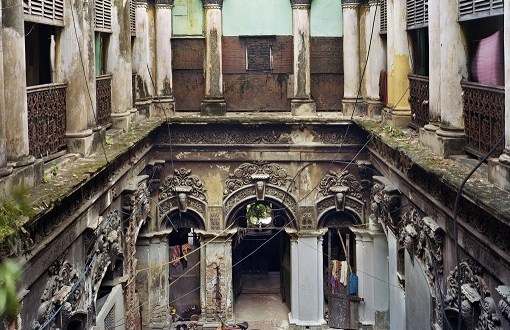
My paper delves into the question whether the grotesque and the fantastic can work concurrently with mainstream historiography to interpret a postcolonial city through the affective windows of nostalgia and trauma. It is partially predicated on the stories of legendary haunted houses from British Calcutta, and partly on the ghosts of historical personages who have a reputation for haunting the city, to locate how Calcutta negotiates with the traces of its past. Some of these incidents of haunting are results of deep historical trauma for those colonizers whose nation was witnessing an accelerated economic decline after the loss of its prosperous colonies and the devastation of the two World Wars. Contrariwise, they also explode the secret that India’s freedom was after all not entirely free of sorrow. These unspeakable secrets, suppressed by a dense conspiracy of silence, became the symptom of a devastating trauma, and return as ghosts in postcolonial narratives of the nation. These accounts show how what is touted as the colonizer’s past can be appropriated, modified and owned by the recalcitrant colonized population to claim their stake in that history.

Anuparna Mukherjee is a PhD candidate in SLLL. She represented ANU at the Cambridge AHRC conference on ‘Time and Temporality’ and recently guest-edited with Arunima Bhattacharya a special issue of Sanglap on ‘City, Space and Literature’.
Lunchtime seminar: Jack Yeager on the Fiction of Linda Lê

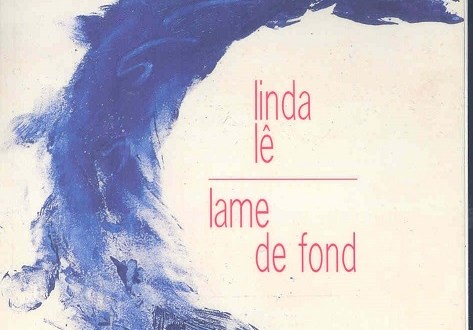
Writers and Their Work in the Fiction of Linda Lê

Thursday 20 April, 1pm Milgate Room, AD Hope Bldg, SLLL

Historically, novelists from former French colonies who write in French have come under special scrutiny. Some have been accused outright of plagiarism; in at least one case, such an accusation ended a writer’s career. Linda Lê, the most prolific contemporary writer in French with ties to Viet Nam, implicitly probes the issues of originality, intertextuality and plagiarism in her fiction by casting writers as main characters. At the same time she examines the multiple identities of immigrant writers in French and their challenges to what constitutes French literature.

Jack A. Yeager is Professor of French Studies and Women’s & Gender Studies at Louisiana State University in Baton Rouge. His work focuses on narratives in French from Viet Nam and from diasporic Vietnamese communities. At LSU he teaches classes on Southeast Asia, Québec and Francophone studies generally as well as courses in French language.

Lunchtime seminar: Leslie Barnes (ANU) on the lost history of Cambodian film

Un cinéma sans image: The lost history of Cambodian film

Thursday 13 April, 1pm Milgate Room, AD Hope Bldg, SLLL

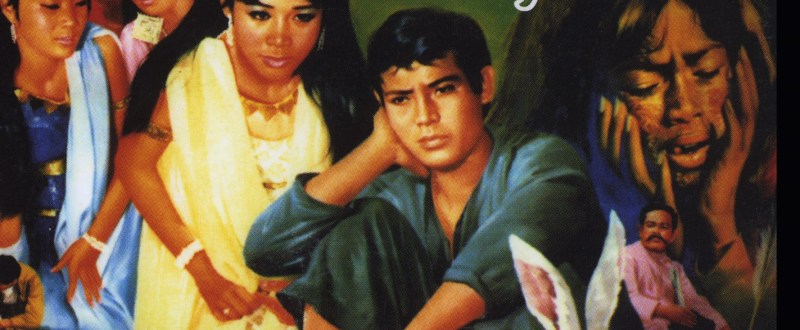
Davy Chou’s Le Sommeil d’or (2011) is the first attempt to recount the forgotten history of the Cambodian film industry, a rich and storied archive that all but disappeared with the Khmer Rouge victory in 1975. To make the film, Chou returned to a homeland that is not fully his to capture the memories of a handful of people with whom he shares neither language nor experience. The result, I will suggest, is a work of palimpsestic memory that layers space and time in an attempt to conjure the traces of this lost cultural heritage. Notably however, Chou uses almost none of the surviving footage from the period in his film. This decision, perhaps unusual given the filmmaker’s objective to make the past visible, encourages us to interrogate the ubiquity of the image in relation to the work of memory. Further, having never ‘left’ the homeland on which he now trains his camera, Chou crafts a film that simultaneously privileges and problematizes the idea of return, offering a post-migratory imagining of the second generation’s relationship to the notions of place and belonging, culture and heritage.

Leslie Barnes is a Senior Lecturer in French Studies and the author of Vietnam and the Colonial Condition of French Literature (Nebraska, 2014). She is currently working on a project on narrative representations of sex work in Southeast Asia and has published on this subject in Screening the Past, French Cultural Studies, and Australian Journal for French Studies.

Tania Evans on the monstrous in Teen Wolf

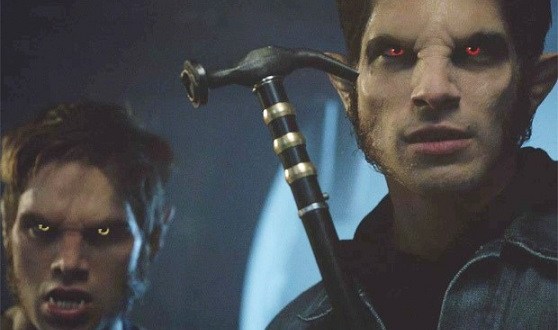
The Phallus or the Cane? Re-reading the monstrous in Teen Wolf through disability and queer theory

Thursday 30 March, 1pm Milgate Room, AD Hope Bldg, SLLL

The growing body of academic scholarship on werewolves has often focused upon gender but rarely has it considered how sexuality and disability are reflected in lycanthropic narratives. Yet the werewolf can be read through these lenses, since it often disrupts normative ideas about the gendered body. These challenges to compulsory able-bodiedness and heterosexuality are the focus of this paper, which analyses MTV’s young adult television series Teen Wolf using disability studies and queer theory. I argue that while the intersection of disability and queerness is integral to the series’ construction of monstrosity, it is also is where the series is most progressive—and subversive. The queer re-reading in this paper is enabled through Marjorie Garber’s work on transvestites, specifically her concept of the detachable phallus. By analysing the monstrous disabled characters in Teen Wolf in terms of how their prostheses signify both their disabilities and their sexual agency, I demonstrate how the series contests heteronormative logic when queerness and disability entwine. Given the series’ popularity among young audiences who are negotiating their own transformation into adulthood, Teen Wolf may invite viewers to recognise that neither sexuality nor ability can be contained within a binary and that variance is not only possible but valuable.

Tania Evans is a final year PhD candidate in SLLL. Her doctoral project investigates the textual construction of masculinities in George R. R. Martin’s A Song of Ice and Fire and its television adaptation Game of Thrones. Her work has been published in Gothic Studies and Masculinities, and will appear in the edited collection Exploring Teen Wolf (McFarland Press).

Lunchtime seminar: Christie Carson (Royal Holloway) on Shakespeare and the Digital World

Shakespeare and the Digital World: When scholarship meets global capitalism

Thursday 30 March, 1pm Milgate Room, AD Hope Bldg, SLLL
In order to understand the place of the academic in the commercially driven world of digital recording, archiving and dissemination of Shakespeare’s plays in text and performance I put together a volume entitled Shakespeare and the Digital World: Redefining Scholarship and Practice. In this book, which tackles the thorny issues of authority and power, Peter Kirwan, my co-editor, and I stress the importance of continually redefining what is meant by ‘Shakespeare’ and ‘the digital’. In this paper I scrutinise my own work to illustrate the importance of speculating about the future in order to help to form, as well as inform, it.

Christie Carson is Reader in Shakespeare and Performance in the Department of English at Royal Holloway University of London. She is the co-editor of The Cambridge King Lear CD-ROM: Text and Performance Archive (Cambridge, 2000) and the Principal Investigator of the AHRB-funded research project Designing Shakespeare: An Audio-Visual Archive, 1960-2000, which documents the performance history of Shakespeare in Stratford and London. She has published widely on the subject of contemporary performance and the influence of digital technology on audience interaction and research practices, including articles for Shakespeare Survey and Performance Research. She has co-edited four volumes of essays for Cambridge University Press.


Lunchtime Seminar: Jürgens on Scientists and Australian Imagination

Non-Scientists, Con-Scientists and the Rocky Horror Clown Show: Wondrous Science in the Australian Context

Thursday 23 March, 1pm Milgate Room, AD Hope Bldg, SLLL

Scientists seek to explore how nature works and ask how humanity can best comprehend different aspects of the world. In fictional and cultural contexts, scientists appear as rebels against the status quo and the ordinary. In the collections of the National Library of Australia, literary scholar Anna-Sophie Jürgens has discovered that some scientists even behave like artists: they are creative, skilled craftsmen, ‘imagineers’ or bewildering performers. By revealing how fictional and fictitious scientists do not merely domesticate the unknown, but also invent and stage it, she will provide new insights into the connections between scientific knowledge and the creative imagination in Australia.

Anna-Sophie Jürgens is a Humboldt postdoctoral fellow currently working “On the Origin and Evolution of a Species: Australian Scientists in Fiction”. She studied Comparative, Russian and French Literature in Germany and Russia. Her research interests include science in fiction, modern and contemporary circus fiction, the history of (violent) clowns, and aesthetics and poetologies of knowledge.

Gemma King at the French Film Festival

On March 16th, Gemma King (School of Literature, Languages and Linguistics, ANU) will be giving a Q&A after the film A Kid (Le Fils de Jean, Philippe Lioret). Before the film, there will be wine and cheese, and the event is being sponsored by the High Commission of Canada (the High Commissioner will be in attendance).

Gemma King’s second Q&A is on March 29th after the film Farewell, My Queen (Les Adieux à la Reine, Benoît Jacquot). At the reception beforehand, there will be sparkling wine and macarons, and the film is designed to tie in with the current Versailles exhibition at the National Gallery.

To book tickets for these events and to find more information about the festival, taking place this month, go to: http://www.affrenchfilmfestival.org/schedule.

Cfp: Australian Society for French Studies Conf: Truth and Representation

Australian Society for French Studies Conference 2017: Truth and Representation

The Australian National University, 13-15 December

Confirmed keynote speakers:
Professor Nicki Hitchcott, University of St Andrews
Dr Chris Watkin, Monash University

What is truth and how do we represent it? For centuries philosophers, artists, theologians, and political thinkers have reflected on the nature of truth, each exploring the various rhetorical and visual strategies with which we might render its universality and its relativity. When we talk about truth, we call upon objectivity, authenticity, and verifiability. But we also inevitably evoke subjectivity, artifice, and mendacity. Indeed, to talk about truth is to recognise its intimate connection to lies.
In our current political climate, terms such as ‘post-truth’ and ‘fake news’ have become ubiquitous. In the wake of Brexit and the American presidential election, and leading up to the 2017 French election, politicians and the media continually call the status of truth and representation into question. How are we to determine what truth is when facts are manipulated to reflect and reinforce the opinions we already hold? How are we to retain our grasp on reality when we see our world increasingly through the mediation of the screen? Such questions bring to mind a much broader problematic surrounding our understanding of social, cultural, and political reality in the light of myriad and ever-evolving ideologies and theoretical orientations.
This conference seeks to reflect on these questions within French and Francophone Studies. What role can our interdisciplinary research play in negotiating the problems of truth and representation in the 21st century, from cultural studies and politics to literature and film? Our aim is to address these problems from a multiplicity of methodological approaches and areas of focus.
We invite proposals for individual papers (20 minutes) and for panels (3-4 papers of 20 minutes each) related to the theme of truth and representation. We will also consider proposals that do not conform directly to this theme. Possible topics for discussion may include, but are not limited to:

• Philosophical, theoretical, and historical/historiographical understandings of truth-making
• Representations of Otherness
• Reflections on language and the shaping of political discourse
• The role of truth in education, including plagiarism and academic dishonesty in the language classroom
• Film and the fluid boundaries of audio-visual representation
• Embodied truths, psychic truths, lived realities
• National myths and the politics of migration
• Life-writing/ Representing the truth of the self
• Truth and religious pluralism
• Postmodernism and post-truth
• Representation in (applied) linguistics and second language acquisition
• Imagination, or the truth of fiction
Please send your proposal of 250 words for papers in English or French to asfs_2017@anu.edu.au by 3 July 2017.

Organising committee: Leslie Barnes, Ashok Collins, Solène Inceoglu, and Gemma King, ANU.

HRC Seminar: Jane Simpson on language in fantasy novels

‘Constrained Creativity: Towards a Natural History of Language in Fantasy Novels’

Professor Jane Simpson (ANU)

Seminar Room 2/3, Sir Roland Wilson Bldg, ANU, Tuesday March 14, 2017, 4.30-5.45 pm

Any fiction writer creates an alternate world, but in some genres, the alternate world is intended to be different from the novelist’s own society. This is most noticeable in science fiction, historical novels, fantasy novels, steampunk, and novels set in non-English speaking countries. Creating a believable alternate world involves paying attention to the languages spoken by the characters, and the place of languages in the world. The characters may speak different languages from each other and from the readers (‘alternate world languages’, AWLs, a type of ‘conlang’), but this must be represented through the language of the readers (the conceit of translation). Within this limitation, writers have some freedom to use words, phrases and sentences that readers won’t know, whether invented, archaic or from another language. These have communicative, symbolic and aesthetic functions.
Can we use the fragments of invented languages in novels as evidence of anything of interest to linguists? I suggest that the answer is a qualified ‘yes’, based on a survey of 50 novels, with more detailed study of three novels, along with consideration of parodies of fantasy novels, and discussion of reception, and comparisons with Peter Carey’s “Ned Kelly” and Dylan Coleman’s “Amazing Grace.”

LSSS Schedule

The schedule for the Literary Studies Seminar Series is now available here.

Hope to see you on Thursdays at 1pm in the Milgate Room.

Thanks to Russell Smith for the organisation and for the magnificent design work.