CuSPP Writing Group

Come along to the CuSPP Writing Group.

It takes place in the A.D. Hope Common Room (Room 113) from 10am each Monday of semester. We begin with an hour but we have the room for two. Please bring along the hot drink and writing apparatus of your choice.

Many thanks to Gemma King for her organisation and graceful time-keeping of the writing groups thus far.

HRC seminar: Srilata Ravi (U of Alberta) on diasporic travel writing

‘Out of Place’: Diasporic travel writing and the impossibility of return

Professor Srilata Ravi (University of Alberta)

Seminar Room 2/3, Sir Roland Wilson Building, ANU, Tuesday March 7, 2017, 4.30-5.30pm

In the last fifty years forced and unforced migrations have resulted in some of the greatest upheavals and displacements seen in history. Refugees, economic migrants, and political exiles have moved away from their geographical places of origin to settle in foreign places, carrying with them (in multiple forms and to different degrees) memories of their past, tensions in the present and aspirations for their future.

While such movements have very often resulted in permanent dislocations, rapid developments in communication technologies and affordable transportation have provided some members of these dispersed communities the opportunity of “looking back” or returning (temporarily, repeatedly or permanently) to their homelands—to places “left behind” in the course of their migration. Through a reading of selected travel texts in the French language, this paper will examine how the affective consequences of such diasporic returns are textualized.

Srilata Ravi is Professor of French and Francophone Literature at the Faculté Saint-Jean of the University of Alberta. Her research interests are in Francophone Postcolonial Studies, Diaspora Studies and Indian Ocean Studies. Her recent publications include Translating the Postcolonial in Multilingual Contexts (with Judith Misrahi-Barak, in press); Sports, modernité et réseaux impériaux : Napoléon Lajoie, Kumar Shri Ranjitsinhji, baseball et cricket au tournant du XXe siècle (with Claude Couture, 2017); Rethinking Global Mauritius: Critical Essays on Mauritian Literatures and Cultures (2013); and Ecritures mauriciennes au féminin: penser l’altérité (with Véronique Bragard 2011).

Cfp: Movement(s) and Mobility symposium

Call for papers: “Movement(s) and Mobility”: Gender Studies Symposium 2017, jointly sponsored by Nanyang Technological University (NTU), Australian National University (ANU) and University of South Australia (UNISA).

This gender studies symposium will take place at NTU on June 2 & 3, 2017
Contact person: Wernmei Yong Ade wmyong@ntu.edu.sg

“Movement(s) and Mobility” is a Gender Studies Symposium that seeks to glean the intersections between gender, movement(s) and mobility, to suggest ways in which these intersections might challenge or subvert existing power-asymmetries in the production of individual agencies, gender identities and ideologies. Understood most readily as physical motion between points in space, movement is thus both relational and relative, whose point of reference can potentially be decentered. Mobility, on the other hand, refers to the conditions that enable movement, a paradigm that begs questions of representation and language.

Unsurprisingly then, movement and mobility have deep connections with gender, the latter being a concept far from static or fixed; as construct, gender is itself highly mobile and often implied in issues of mobility.

As such, this symposium is also keen to examine the how the intersections between gender, movement(s) and mobility might give rise to new shifts in the way gender is constituted, essentially rethinking gender and its significance in the context of rapid global change and movement. This symposium is primarily interested in, but certainly not limited to, examining these intersections in the following:

Technology and augmented movement; Political and activist movements; Transnational literary representations of movement and mobility; Travel narratives; Performance and performance art; Virtual and imagined movement; Immigration and emigration; Displacement, refugees, and asylum; Trauma Studies; Disability Studies; Ethics, inter-relational capacities; Ability, agency, and accessibility; Daily mobility; Social, political, and economic movement and mobility; Collective and mass movement; Movement between urban and rural spheres.

Please submit abstracts of 300-500 words for 20 minute presentations to wmyong@ntu.edu.sg no later than March 31, 2017 to be considered.
Successful applicants will be notified within two weeks of submission deadline. Please also include a short biography of approximately 50 words.

Cfp: Thursday Lunchtime Seminar (TLS)

There are only 4 posts left: 17 August, and 5, 19 and 26 October. Book now to avoid disappointment! Contact russell.smith@anu.edu.au to reserve your place.

Next semester’s program will run from Thursday 27 July to Thursday 9 November. Places on the Thursday Lunchtime Seminar program are open to SLLL staff, graduate students, visiting fellows and visiting scholars from other schools in the ANU, and from other institutions in Canberra and around the world. The seminar especially encourages researchers to present work in progress – draft chapters or trial-run conference papers – for engaged and collegial feedback and discussion. Seminars are from 1-2 Thursdays in the Milgate Room, first floor A D Hope Building.

Staff, students and visitors of ANU, University of Canberra and ADFA are encouraged to attend and to present work-in-progress for lively and collegial feedback and discussion – on any topic ranging from literary studies to film to cultural studies to gender and sexuality and beyond…

In particular, please encourage graduate students and school visitors to attend and to present their work. Please feel free to get in touch if you have any questions.

Russell Smith: russell.smith@anu.edu.au

Cfp: City & Literature Conference (ANU)


Call for Papers: The Uncanny City: Strangers and Strangeness in Urban Literature

Keynote Speakers:
Dr. Matthew Beaumont (University College London)
Dr. Brigid Rooney (University of Sydney)

The conference will be held 15-16 June 2017 at the Sir Roland Wilson Building, The Australian National University, 120 McCoy Circuit, Acton 2601, Canberra.

Cities are in constant flux as chaotic, amorphous spaces of hybridity and cultural contamination. According to Bill Ashcroft, they operate “in an interstitial space between the nation and the world”. As cultural nerve centres and hubs of trade and administration, they often represent a nation to the world and yet urban landscapes with their radical openness, creativity and dissent create their own spaces of contestation that can potentially unsettle any totalizing discourse of national identity. There is a quintessential strangeness or subversive residue in a city that remains unmappable within a single, homogeneous narrative of identity. Everyone who dwells in the city sees it differently, inhabiting different spaces and generally functioning within defined territories. Thus, the encounter with “strangeness” and strangers in our everyday may happen in random ways. Sometimes we simply stumble into other people’s maps and realities outside our comfort zone that bring us in contact with the “otherness” of city, lurking beyond the peripheries of the familiar. However, the protean and ever-changing face of the city shaped by incongruous and heterogeneous affects, ideas, sentiments and aspirations also induces a sense of crushing disconnectedness, a feeling that we live as strangers. To grapple with the myriad forms of alienation, cities have simultaneously built up strong cultures of commensality through different communal activities, sporting cultures, friendship and urban sociality in the public domain to create, however falteringly, a sense of being at home in the city.

A proverbial stranger in the crowd is embodied by the figure of the flâneur. In our times, the phenomenon of internal and global migration on an unprecedented scale has added new layers and complexities to the notion of strangers in the city. The ways in which communities and individuals grapple with different forms of strangeness, isolation and even discrimination in their everyday existence have fostered a robust body of literature, specifically focusing on ethnic minorities, refugees, and asylum seekers.

As fecund sites of imagination, yearning, desire and fantasy, the metropolis opens up spaces that are crucial in bringing about significant political and creative transformations. This symposium calls for the multifarious ways of representing the city space in literary and cultural narratives, particularly in the light of its contradictions, and overlaps between the familiar/familial and the manifold categorises of “strange”, “alien” and “unknown” that a city breeds and comprises in itself. It aims to look at the ways in which the city has engendered and dealt with the polarities of intimacy and aloofness or isolation in private and public spheres. This negotiation with difference/distance and connectedness extends to different realms, interfaces and contact zones of representation, be it in the diverse range of affective realities clamouring for coexistence in urban spaces, or in the subversive ideologies, art forms and literature that challenges the mainstream and the habitual.

In postcolonial urbanscapes, this confrontation with “strangeness” is also embedded in the traces of the colonial past which often pervades our consciousness, like spectral hauntings. The relation between the colonial uncanny and postcolonial trauma/nostalgia itself opens up a rich area of inquiry.

The dialectics between strangeness and familiarity may thus be traced in different ways of mapping and “unmapping” the urban landscape and its spatial practices; by locating the transformations of the same place into an “elsewhere” at different hours of the day— “nighttime city is another city” as Matthew Beaumont puts it—or by charting the makeover of a place brought about by a specific festival or celebration.

Not necessarily limiting cities to a descriptive category and studying the urban phenomenon as an analytical tool for social and political understanding of people and spaces in relation to our everyday encounter with the “strange(er)” that is either unfamiliar or simply different, an indicative list of potential topics includes:

Strangers, Immigrants and Refugees in the City
The Maps and the “Unmappables” in Urban cartography
City and the Culture of Dissent
City and Affects
City in Subversive Arts
Urban Utopia/Dystopia and “heterotopias”
The Flâneur and the City
City and Spectrality
City and the “Uncanny”
The “dead hour”: Nights in the City
Urban Alienation and Sociality in Public Places
“The Home and the World”: The Private and the Public in the City/ The Marketplace and Familial Domesticity in Urban Conurbations
Cities of the Empire or Cities as Colonial/Postcolonial Spaces in Literature
City in Travel Literature
City as literary capital
Littérisation of the city
City and the Culture of the Streets
City and Crime
Smart Cities/ Cities of the new millennium in literature
City and Technology

Submissions
Contributors are welcome to consider the following topics without being limited to them. Interested participants are requested to submit an abstract of about 300 words to anucityconference2017@gmail.com by the 7th of March, 2017. Selected presenters will be informed by the 25th of March, 2017.

Registration
Date: TBA
Registration fee:
Full-time Academic and Professionals: $145 AUD
Postgraduate Researchers: $95 AUD
ANU researchers: $45 AUD

Masterclass: Validating Historical Voyeurism (Prof Julie Allen)

Validating Historical Voyeurism:A Case for Archival Work

Presented by Professor Julie Allen (Brigham Young University)

Thursday 8 December 2016, 10am-12pm, Milage Room #165, Top Floor, AD Hope

While much great academic work happens exclusively in the mind, any sort
of detailed, original historical research requires archival work, often in far- ung, remote locations with limited opening hours, complicated catalogues, and seemingly arbitrary rules. This masterclass explores the challenges and delights of working in archives, from locating obscure materials to deciphering the handwriting in the letters and diaries of long-dead people. Taking early European silent cinema as a case study, we will compare collections, access requirements, and working conditions in the Danish Film Institute (DFI), the Lund University Library, the Deutsches Kinematek, and the Deutsches Filminstitut (DIF) to answer the following questions: What is the value of archival work? How can I nd what I’m looking for? What do I need to be aware of? These are some of the questions this two-hour session aims to explore.

This workshop is open to all HDR students and Early Career Researchers.

Please contact Dr Katie Sutton if you’d like to take part in this masterclass: katie.sutton@anu.edu.au

HRC Seminar: Ian Balfour (York U) on Inversion and Discourse on the Sublime

Inversion: On Some Poetics and Politics in the Discourse of the Sublime

Professor Ian Balfour, York University

HRC Conference Room, A.D. Hope Building, ANU. Tuesday 6 December 2016, 4.15 – 5.30pm.

This talk looks into how language works in the discourse of the sublime, zeroing on the figure of inversion from Longinus to Milton’s Paradise Lost (read through Edmund Burke) to Friedrich Hölderlin and beyond.  Inversion emerges as a disruptive figure of speech poised between nature and culture and for that reason as a site of the political and even most particularly as a “figure of revolution,” as one rhetorician calls it.

Ian Balfour is Professor of English at York University. He is the author of books on The Rhetoric of Romantic Prophecy and on Northrop Frye. He edited with the filmmaker Atom Egoyan Subtitles: On the Foreignness of Film and with Eduardo Cadava a double-issue of South Atlantic Quarterly on human rights, and edited an SAQ issue on Late Derrida. He was a co-translator of Benjamin’s dissertation and recently co-curated an exhibition at Tate Britain on William Hazlitt’s art criticism. He’s published on a range of topics in popular and unpopular culture, including recent essays on James Baldwin’s film criticism, Austen’s Emma and its film adaptations, Hölderlin’s theory of tragedy, and on cover songs. He has taught at Cornell as the M. H. Abrams Distinguished Visiting Professor of English and as well as at Williams College, Rice, and the Goether University in Frankfurt, among others. He is currently finishing a book on the sublime.

Public lecture: Professor Julie Allen (Brigham Young University) on the gendered reception of European silent film stars

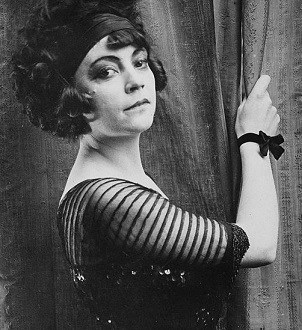
Divas Down Under: The Gendered Reception of European Silent Film Stars in Pre-WWI Australia

Professor Julie Allen, Brigham Young University

HRC Conference Room, A.D. Hope Building, ANU. Thursday 8 December 2016, 5.30pm.

Already by the early 1910s, cinema attendance was a national pastime in Australia, with 12.5% of the population going to the pictures every Saturday night. Australian film production was innovative but too limited to meet demand and Hollywood was still a grove of orange trees, so a large percentage of films shown in Australia were imported from Europe. Although most films were advertised simply by their title and sometimes the production company, the emergence of the monopoly-distribution system led to the rise of the star culture that sold films on the strength of an actor or actress’s name. Most of the early stars whose films were shown widely across Australia between 1911 and 1915 were women, including the Danish actress Asta Nielsen and the German actress, Henny Porten. This talk maps the scope of these female European stars’ popularity in pre-World War I Australia and explores the way the growing political tensions between Britain and Germany informed the reception and circulation of their films.

This public lecture is hosted by the School of Literature, Languages and Linguistics and the Gender Institute.

ANU Gender Institute: genderinstitute.anu.edu.au
ANU School of Literature, Languages and Linguistics: http://slll.anu.edu.au/

HRC event: Kate Flaherty and Rob Conkie on Performing Research on Henry V

Making memories: Performing Research on Henry V in Australia (1916-2016)

Tuesday 22 November, 4.15-5.30pm, HRC Conference Room, AD Hope Bldg, SLLL

How is performance research best articulated?
Does live presentation afford the researcher opportunities that are commonly untapped?
How is research a kind of performance?

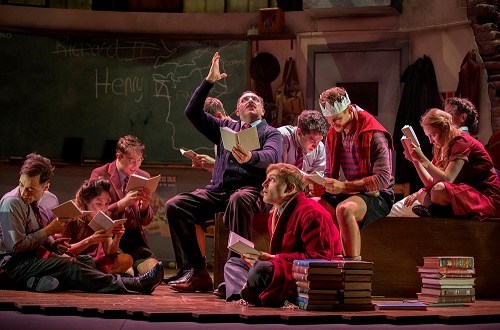
When the first ANZAC Day (25 April 1916) collided with the 300th anniversary of Shakespeare’s death (23 April 1916), a special kind of challenge was issued to the Australian commemorative calendar. To this day productions of Henry V still bear traces of the ways in which the newly federated nation met this challenge. From a newsreel of a ‘Shakespeare in the Schools’ on the steps of the ANZAC memorial in 1955; to the 1995 Bell Shakespeare production featuring ‘diggers’; to the 2014 Bell production which couched its meditation of war politics in the context of the London blitz, Australian treatments of the play map a specifically Australian politics of war remembrance. In this unique event, using moved readings of key speeches from the play, theatre scholars Rob Conkie (La Trobe) and Kate Flaherty (ANU) will perform recent discoveries about the cultural work it has been used to achieve in Australia since 1916.

Light refreshments provided. All welcome.