Cfp: City & Literature Conference (ANU)


Call for Papers: The Uncanny City: Strangers and Strangeness in Urban Literature

Keynote Speakers:
Dr. Matthew Beaumont (University College London)
Dr. Brigid Rooney (University of Sydney)

The conference will be held 15-16 June 2017 at the Sir Roland Wilson Building, The Australian National University, 120 McCoy Circuit, Acton 2601, Canberra.

Cities are in constant flux as chaotic, amorphous spaces of hybridity and cultural contamination. According to Bill Ashcroft, they operate “in an interstitial space between the nation and the world”. As cultural nerve centres and hubs of trade and administration, they often represent a nation to the world and yet urban landscapes with their radical openness, creativity and dissent create their own spaces of contestation that can potentially unsettle any totalizing discourse of national identity. There is a quintessential strangeness or subversive residue in a city that remains unmappable within a single, homogeneous narrative of identity. Everyone who dwells in the city sees it differently, inhabiting different spaces and generally functioning within defined territories. Thus, the encounter with “strangeness” and strangers in our everyday may happen in random ways. Sometimes we simply stumble into other people’s maps and realities outside our comfort zone that bring us in contact with the “otherness” of city, lurking beyond the peripheries of the familiar. However, the protean and ever-changing face of the city shaped by incongruous and heterogeneous affects, ideas, sentiments and aspirations also induces a sense of crushing disconnectedness, a feeling that we live as strangers. To grapple with the myriad forms of alienation, cities have simultaneously built up strong cultures of commensality through different communal activities, sporting cultures, friendship and urban sociality in the public domain to create, however falteringly, a sense of being at home in the city.

A proverbial stranger in the crowd is embodied by the figure of the flâneur. In our times, the phenomenon of internal and global migration on an unprecedented scale has added new layers and complexities to the notion of strangers in the city. The ways in which communities and individuals grapple with different forms of strangeness, isolation and even discrimination in their everyday existence have fostered a robust body of literature, specifically focusing on ethnic minorities, refugees, and asylum seekers.

As fecund sites of imagination, yearning, desire and fantasy, the metropolis opens up spaces that are crucial in bringing about significant political and creative transformations. This symposium calls for the multifarious ways of representing the city space in literary and cultural narratives, particularly in the light of its contradictions, and overlaps between the familiar/familial and the manifold categorises of “strange”, “alien” and “unknown” that a city breeds and comprises in itself. It aims to look at the ways in which the city has engendered and dealt with the polarities of intimacy and aloofness or isolation in private and public spheres. This negotiation with difference/distance and connectedness extends to different realms, interfaces and contact zones of representation, be it in the diverse range of affective realities clamouring for coexistence in urban spaces, or in the subversive ideologies, art forms and literature that challenges the mainstream and the habitual.

In postcolonial urbanscapes, this confrontation with “strangeness” is also embedded in the traces of the colonial past which often pervades our consciousness, like spectral hauntings. The relation between the colonial uncanny and postcolonial trauma/nostalgia itself opens up a rich area of inquiry.

The dialectics between strangeness and familiarity may thus be traced in different ways of mapping and “unmapping” the urban landscape and its spatial practices; by locating the transformations of the same place into an “elsewhere” at different hours of the day— “nighttime city is another city” as Matthew Beaumont puts it—or by charting the makeover of a place brought about by a specific festival or celebration.

Not necessarily limiting cities to a descriptive category and studying the urban phenomenon as an analytical tool for social and political understanding of people and spaces in relation to our everyday encounter with the “strange(er)” that is either unfamiliar or simply different, an indicative list of potential topics includes:

Strangers, Immigrants and Refugees in the City
The Maps and the “Unmappables” in Urban cartography
City and the Culture of Dissent
City and Affects
City in Subversive Arts
Urban Utopia/Dystopia and “heterotopias”
The Flâneur and the City
City and Spectrality
City and the “Uncanny”
The “dead hour”: Nights in the City
Urban Alienation and Sociality in Public Places
“The Home and the World”: The Private and the Public in the City/ The Marketplace and Familial Domesticity in Urban Conurbations
Cities of the Empire or Cities as Colonial/Postcolonial Spaces in Literature
City in Travel Literature
City as literary capital
Littérisation of the city
City and the Culture of the Streets
City and Crime
Smart Cities/ Cities of the new millennium in literature
City and Technology

Submissions
Contributors are welcome to consider the following topics without being limited to them. Interested participants are requested to submit an abstract of about 300 words to anucityconference2017@gmail.com by the 7th of March, 2017. Selected presenters will be informed by the 25th of March, 2017.

Registration
Date: TBA
Registration fee:
Full-time Academic and Professionals: $145 AUD
Postgraduate Researchers: $95 AUD
ANU researchers: $45 AUD

Masterclass: Validating Historical Voyeurism (Prof Julie Allen)

Validating Historical Voyeurism:A Case for Archival Work

Presented by Professor Julie Allen (Brigham Young University)

Thursday 8 December 2016, 10am-12pm, Milage Room #165, Top Floor, AD Hope

While much great academic work happens exclusively in the mind, any sort
of detailed, original historical research requires archival work, often in far- ung, remote locations with limited opening hours, complicated catalogues, and seemingly arbitrary rules. This masterclass explores the challenges and delights of working in archives, from locating obscure materials to deciphering the handwriting in the letters and diaries of long-dead people. Taking early European silent cinema as a case study, we will compare collections, access requirements, and working conditions in the Danish Film Institute (DFI), the Lund University Library, the Deutsches Kinematek, and the Deutsches Filminstitut (DIF) to answer the following questions: What is the value of archival work? How can I nd what I’m looking for? What do I need to be aware of? These are some of the questions this two-hour session aims to explore.

This workshop is open to all HDR students and Early Career Researchers.

Please contact Dr Katie Sutton if you’d like to take part in this masterclass: katie.sutton@anu.edu.au

HRC Seminar: Ian Balfour (York U) on Inversion and Discourse on the Sublime

Inversion: On Some Poetics and Politics in the Discourse of the Sublime

Professor Ian Balfour, York University

HRC Conference Room, A.D. Hope Building, ANU. Tuesday 6 December 2016, 4.15 – 5.30pm.

This talk looks into how language works in the discourse of the sublime, zeroing on the figure of inversion from Longinus to Milton’s Paradise Lost (read through Edmund Burke) to Friedrich Hölderlin and beyond.  Inversion emerges as a disruptive figure of speech poised between nature and culture and for that reason as a site of the political and even most particularly as a “figure of revolution,” as one rhetorician calls it.

Ian Balfour is Professor of English at York University. He is the author of books on The Rhetoric of Romantic Prophecy and on Northrop Frye. He edited with the filmmaker Atom Egoyan Subtitles: On the Foreignness of Film and with Eduardo Cadava a double-issue of South Atlantic Quarterly on human rights, and edited an SAQ issue on Late Derrida. He was a co-translator of Benjamin’s dissertation and recently co-curated an exhibition at Tate Britain on William Hazlitt’s art criticism. He’s published on a range of topics in popular and unpopular culture, including recent essays on James Baldwin’s film criticism, Austen’s Emma and its film adaptations, Hölderlin’s theory of tragedy, and on cover songs. He has taught at Cornell as the M. H. Abrams Distinguished Visiting Professor of English and as well as at Williams College, Rice, and the Goether University in Frankfurt, among others. He is currently finishing a book on the sublime.

Public lecture: Professor Julie Allen (Brigham Young University) on the gendered reception of European silent film stars

Divas Down Under: The Gendered Reception of European Silent Film Stars in Pre-WWI Australia

Professor Julie Allen, Brigham Young University

HRC Conference Room, A.D. Hope Building, ANU. Thursday 8 December 2016, 5.30pm.

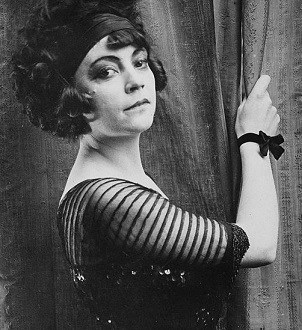
Already by the early 1910s, cinema attendance was a national pastime in Australia, with 12.5% of the population going to the pictures every Saturday night. Australian film production was innovative but too limited to meet demand and Hollywood was still a grove of orange trees, so a large percentage of films shown in Australia were imported from Europe. Although most films were advertised simply by their title and sometimes the production company, the emergence of the monopoly-distribution system led to the rise of the star culture that sold films on the strength of an actor or actress’s name. Most of the early stars whose films were shown widely across Australia between 1911 and 1915 were women, including the Danish actress Asta Nielsen and the German actress, Henny Porten. This talk maps the scope of these female European stars’ popularity in pre-World War I Australia and explores the way the growing political tensions between Britain and Germany informed the reception and circulation of their films.

This public lecture is hosted by the School of Literature, Languages and Linguistics and the Gender Institute.

ANU Gender Institute: genderinstitute.anu.edu.au
ANU School of Literature, Languages and Linguistics: http://slll.anu.edu.au/

HRC event: Kate Flaherty and Rob Conkie on Performing Research on Henry V

Making memories: Performing Research on Henry V in Australia (1916-2016)

Tuesday 22 November, 4.15-5.30pm, HRC Conference Room, AD Hope Bldg, SLLL

How is performance research best articulated?
Does live presentation afford the researcher opportunities that are commonly untapped?
How is research a kind of performance?

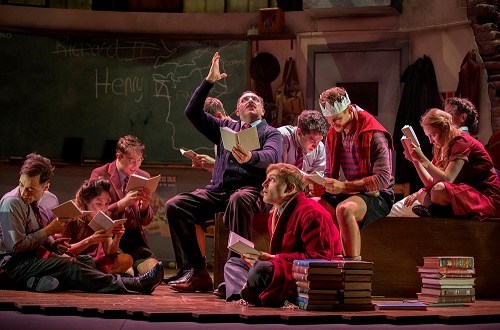
When the first ANZAC Day (25 April 1916) collided with the 300th anniversary of Shakespeare’s death (23 April 1916), a special kind of challenge was issued to the Australian commemorative calendar. To this day productions of Henry V still bear traces of the ways in which the newly federated nation met this challenge. From a newsreel of a ‘Shakespeare in the Schools’ on the steps of the ANZAC memorial in 1955; to the 1995 Bell Shakespeare production featuring ‘diggers’; to the 2014 Bell production which couched its meditation of war politics in the context of the London blitz, Australian treatments of the play map a specifically Australian politics of war remembrance. In this unique event, using moved readings of key speeches from the play, theatre scholars Rob Conkie (La Trobe) and Kate Flaherty (ANU) will perform recent discoveries about the cultural work it has been used to achieve in Australia since 1916.

Light refreshments provided. All welcome.


Lunchtime seminar: Russell Smith on vitalism & Frankenstein films

The ghosts of vitalism in contemporary Frankenstein films

Thursday 10 November, 1pm Milgate Room, AD Hope Bldg, SLLL

Vitalism – the notion of a distinct life force – is usually regarded as an obsolete and discredited theory. In 1818, however, vitalism was the official doctrine of the Royal College of Surgeons, and Mary and Percy Shelley’s physician William Lawrence its most controversial materialist opponent. There is evidence to suggest that Victor Frankenstein’s ‘bad science’ is implicitly a product of his vitalist thinking. Drawing on Georges Canguilhem’s account of the persistence of vitalist ideas, and Shane Denson’s account of the Frankenstein film as an ‘anthropotechnical interface’, this paper examines how the ghosts of vitalism haunt contemporary thinking about artificial life, with reference to a range of recent film versions of the Frankenstein story.

Russell Smith lectures in Modernism Literature and Literary Theory in SLLL. He has published widely on Samuel Beckett, including a recently-completed monograph titled Beckett’s Sensibility. His new project, provisionally titled Frankenstein: A Life in Theory, uses Mary Shelley’s Frankenstein and its various ‘hideous progeny’ in film and other media as a way of exploring the relations between literary theory, biology, vitalism and materialism.

Lunchtime Seminar: Barbara Holloway on close reading, websites and content for the Anthropocene

‘How a Horse Faces a Hailstorm’: Close Reading, Websites

and Content for the Anthropocene


Thursday 3 November, 1pm Milgate Room, AD Hope Bldg, SLLL

In this paper I examine prose structures and government websites using critical reading practice to identify rhetorical and narrative devices common to both. Until now rarely used in evaluation of the digital interface, I argue such a reading identifies the site-visitor’s experience of continuity or of alienation in the transfer from page to web conventions, from ‘narrative’ to ‘interactive’ infrastructure.

I first place the paper culture of representations of three topics—environmental issues, place-relations and individual responsibility — historically, through prose of fiction (Stories of the Riverina, E. O. Schlunke 1965), instruction (Bush Fire Control in Australia, R. H. Luke, 1961) and non-fiction (David Lindenmayer, Woodlands: a Disappearing Landscape, 2005).

I then take these genres and topics to examine the interface of current Government websites of WA, NSW and the ACT. All dedicated to climate change, a close reading of them shows certain linear traditions of ‘paper’ communication are perpetuated in layouts and menu options. While rhetorical devices and figurative language remain as visual image and colour content, these too draw on material traditions.

Barbara Holloway is a Visiting Fellow in SLLL, researching the writers and natural history of South-West region of NSW for a publication on the makings of forest, literature and conservation. She has published research and creative nonfiction in various journals and collections and has an essay in the next issue of Fusion and a review in the Australasian Journal of Ecocriticism (of which she is an assistant editor).

Lunchtime Seminar: Thomas Nulley-Valdés on ‘Re-thinking McOndo’

Re-thinking McOndo

Thursday 27 October, 1pm Milgate Room, AD Hope Bldg, SLLL

It has been twenty years since the publication of the controversial pan-Hispanic short story anthology McOndo (1996). I propose a rereading of this text by analysing both the position of the authors in ‘world literary space’ (Casanova, 2004) and their position-takings within this space.

I propose that McOndo (1996) is an atypical anthology which should be considered a fundamental text in the broader project carried out by a whole generation of writers, to step out of the shadow of the Spanish American literary boom and the influence of Magical Realism, thereby creating a more autonomous literary space for Spanish American writers.
My talk will also incorporate twenty-seven interviews with some of the principal editors and authors, and an analysis of other significant texts such as Cuentos con walkman (1993), which serves as inspiration for McOndo (1996), and the short story anthology Se habla español: voces latinas en USA (2000) in order to consider the positions which these authors take, the critical and academic discourses they have provoked, and the effects these have had on the careers of the editors and participating authors.

Thomas Nulley-Valdés is a third year PhD student in the Spanish Programme in the School of Literature, Languages and Linguistics (SLLL). In 2016 he helped organise the conference “Our America: Past and Future of the New Latin American Fiction” Literature Colloquium at The University of South Florida, Tampa.

MASTERCLASS: ‘Tell Me Your Secret, Dr James’.

Students are invited to attend a masterclass given by Professor Ann Heilmann (Cardiff) on Tuesday 1 November at 10am in the Milgate Seminar Room, AD Hope, SLLL. The masterclass will be of interest to students working in literature and biography, biofiction, as well as those working in gender studies or studying transgender from a range of disciplinary backgrounds, including history, anthropology and philosophy.

James Miranda Barry, a sensational transgender case of the nineteenth century

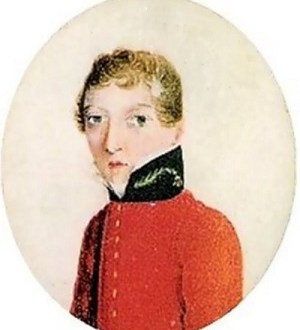
This masterclass takes as its focus a spectacular case of historical transgender to examine the resonance of notions of sex/gender instability in Victorian, twentieth century and contemporary depictions of James Miranda Barry (1789?- 1865). James Barry graduated in medicine from Edinburgh in 1812, entered the medical branch of the British military in 1813, and from 1816-1859 served as a medical officer, humanitarian and sanitary reformer in the British colonies (Cape Colony, Mauritius, Jamaica, Windward and Leeward Islands, St Helena, Malta, Corfu, and Canada). As Inspector General he attained the highest rank in the medical branch of the British military. After his death in 1865 sensational claims were made about his body having been that of a woman. It was not until the 1980s that evidence of Barry’s female birth identity was found.

How did Victorian contemporaries respond to these disclosures? Are there any similarities between Victorian and contemporary constructions of the figure of the gender crosser? How is transgender represented in textual format? Do biographers use different textual strategies from novelists and playwrights? These are some of the questions this two-hour session seeks to explore.

Please contact Dr Kate Mitchell if you’d like to take part in this masterclass, and in order to receive reading materials.

Lunchtime Seminar: Annelise Roberts on TOTEM I: trauma, materiality, and me

TOTEM I: trauma, materiality, and me

Thursday 20 October, 1pm Milgate Room, AD Hope Bldg, SLLL

The story of my grandfather’s involvement as test subject in the British Government’s nuclear testing program in South Australia provokes my creative enquiry into trauma, embodiment, and materiality. Confronting the events of Operation Totem at Emu Field – which have only been desultorily publicly commemorated – means confronting numbness and gaps in personal, familial and public knowledge and feeling, leading me to ask the following questions: How am I materially and discursively implicated in this massive injustice? And what does my implication suggest about the nature of embodiment? In this talk I outline my research proposal for this project and sketch out its engagement with trauma theories and new materialisms.

Annelise Roberts is a PhD candidate in creative writing at the School of Literature, Language and Linguistics. Her research interests include trauma, feminism, new materialisms, and life writing. She has previously worked in the community sector and trained as an anthropologist.